This work assembles a series of temporal fragments narrated by Sym, a non-singular, tentacular consciousness inspired by the life cycle of Turritopsis dohrnii, the so-called immortal jellyfish. Rather than following a linear chronology, the narrative unfolds as a looping archive where multiple generations of cloned jellyfish re-encounter landscapes across time. As glaciers defrost, seas warm and darken, and human infrastructures rise and disappear, this shifting narrator collapses distinctions between organism and environment, echoing theories of tentacular thinking and multispecies kinship. Each fragment captures a moment of the future that retains a resemblance of the past, seen through ice, fire, pollution, water, migration, or myths; revealing how geological processes and cultural imaginaries co-produce one another.

By adopting a perspective that is both from the polyps and at a planetary level, the text proposes an alternative mode of storytelling about climate change: one that resists the urge for endings, embracing instead cycles of regression, renewal, and return. The immortality of Turritopsis dohrnii becomes a metaphor for non-anthropocentric memory, suggesting that the future cannot be written as a single line but must be felt through layered temporalities. Blending scientific observation, myth-making, and political reflection, this narrative asks how beings (human and nonhuman) might inhabit an unstable planet without relying on fantasies of permanence. It invites the reader to consider what forms of kinship, attention, and imagination emerge when time itself becomes fluid.
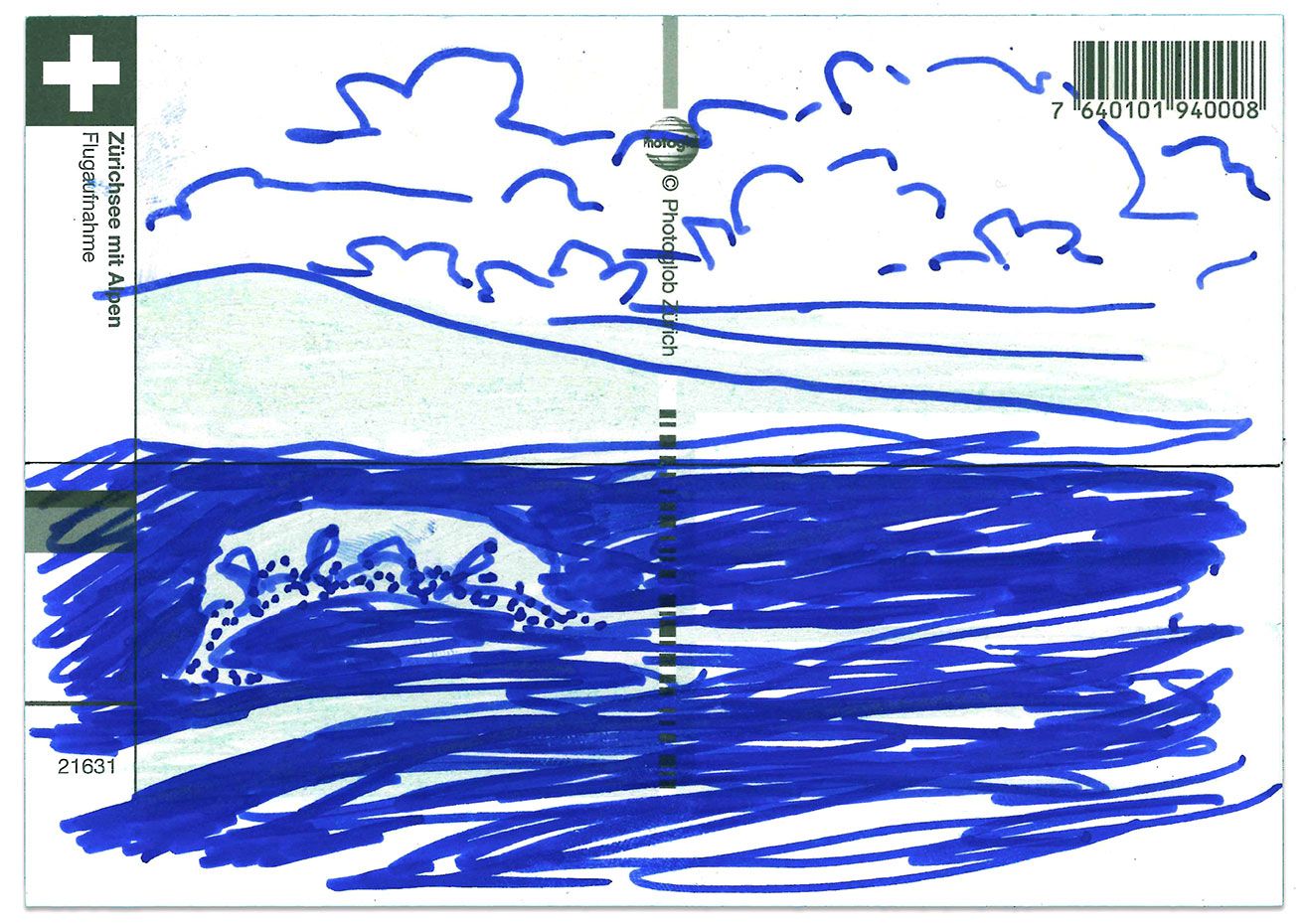
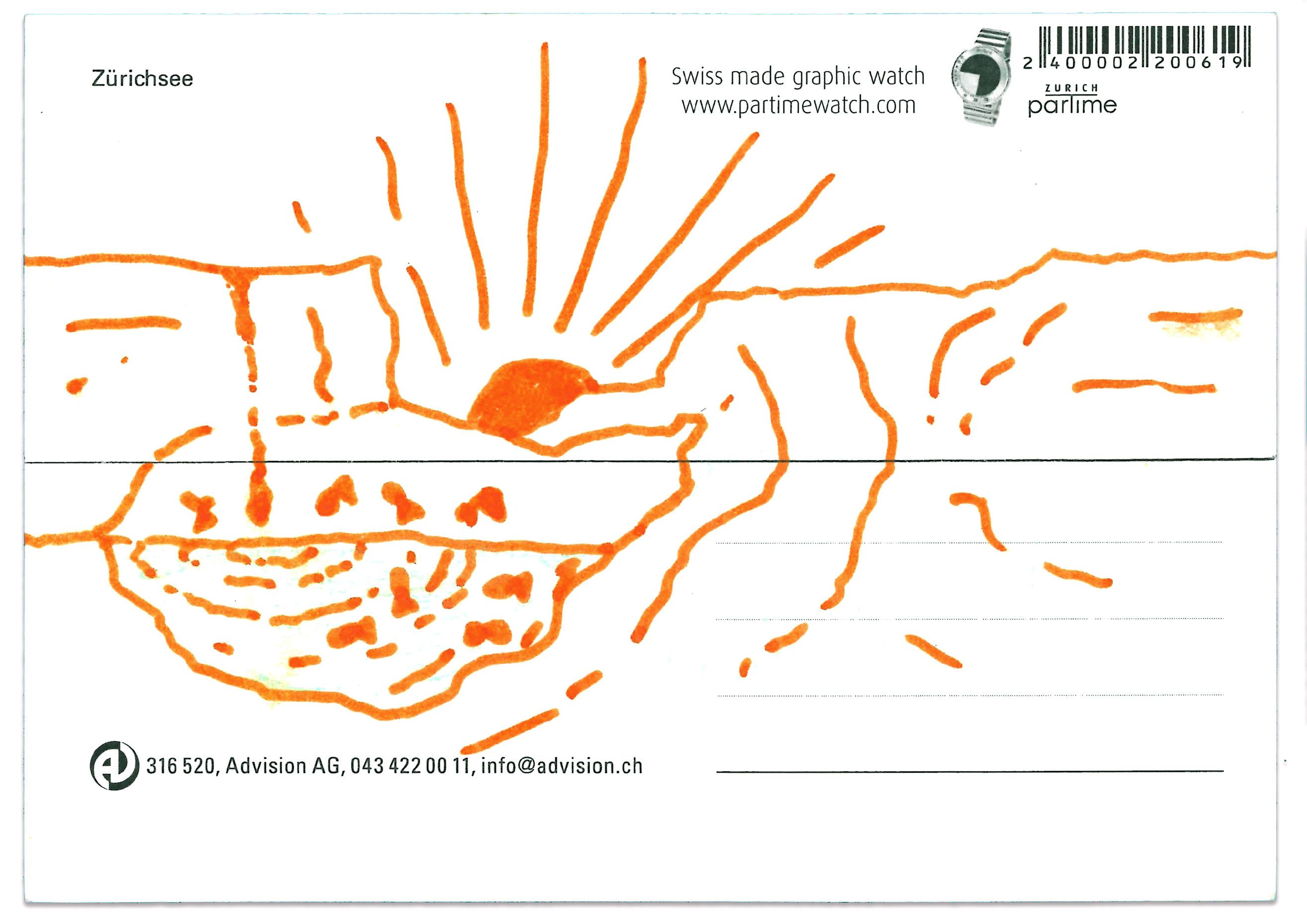
The following text consists of fragments retrieved from a collective narrative exercise. It works as a repository for thoughts, images, places and emotions connected to ecological change and the passage of time. The narrator is not a singular being, but a lineage, a consciousness that loops through time, observing the landscape as it freezes, melts, burns and frosts again. This collection passes through different generations, merging speculative biology with critical theory to document an underwater memory older than humans.

Sym 6, 2456

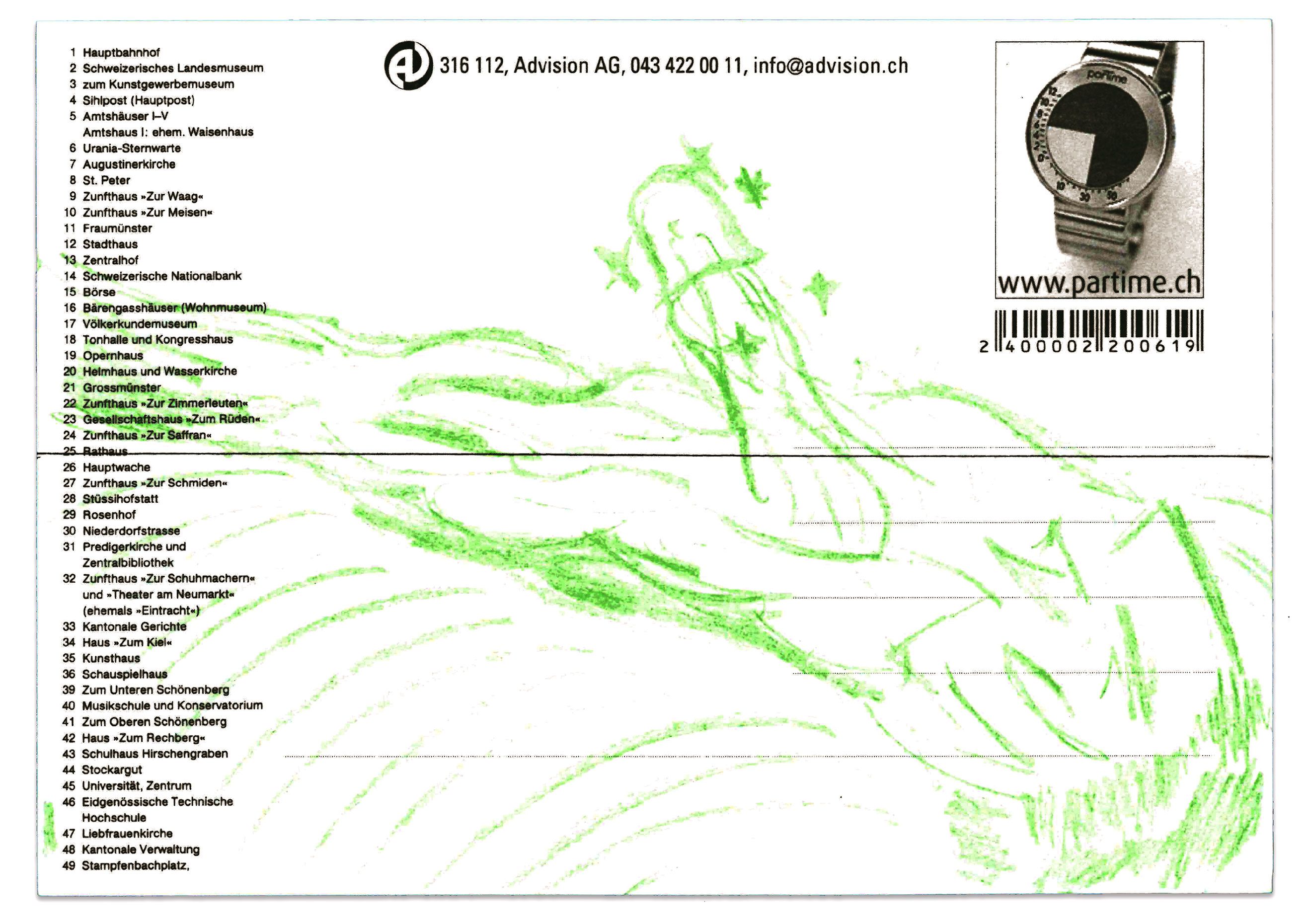
I remember when the world was ice. A blanket so vast it hid whole mountains. I drifted through underwater currents in a chamber of cold so ancient every sound would echo for the longest time. Below me lay an old source of energy that no sunlight had touched for thousands of years, but that was capable of emanating its own warmth. All us floating beings and lake creatures would stay together like an orchestrated flow, waiting for something spectacular to happen, like an orange sunset through the ceiling of ice or the sudden apparition of eldritch beings like the Loch Ness monster.

.

.

.

.

.

.

.

.

.

.

.

/ Adapted from a fragment shared by Lou Croff Blake in the collective archive*.

/ Adapted from a fragment shared by Guillermo Martinez de Velasco in the collective archive.

/ The orchestrated flow in this case can be seen as a hint to Negri’s understanding of the multitude, where it acts as a network of diverse struggles (e.g., class, gender, race) that fuel collective power without reducing to a single relation and enabling radical democracy via spontaneous, non-hierarchical movements like assemblies.

/ Adapted from a fragment shared by Jere Ikongio in the collective archive.

/ From Scots "elritch" with uncertain roots possibly from Old English elements, suggesting "otherworldly" or "foreign realm," such as æl-rīce (elf-kingdom) or a prefix meaning "strange, from elsewhere." See Alaric Hall, “The Etymology and Meanings of Eldritch,” Scottish Language 26 (2007): 16–22.

/ Adapted from a fragment shared by Layla Fassa in the collective archive.

/ Interesting how the Latin monstrum comes from the verb monēre (“to warn/ admonish/ advise”). Monstrous creatures will guide us. See: “monster (n.),” Online Etymology Dictionary, s.v. “monster.”

Drawing from 2025 SoC Cohort

Sym 5, 2367

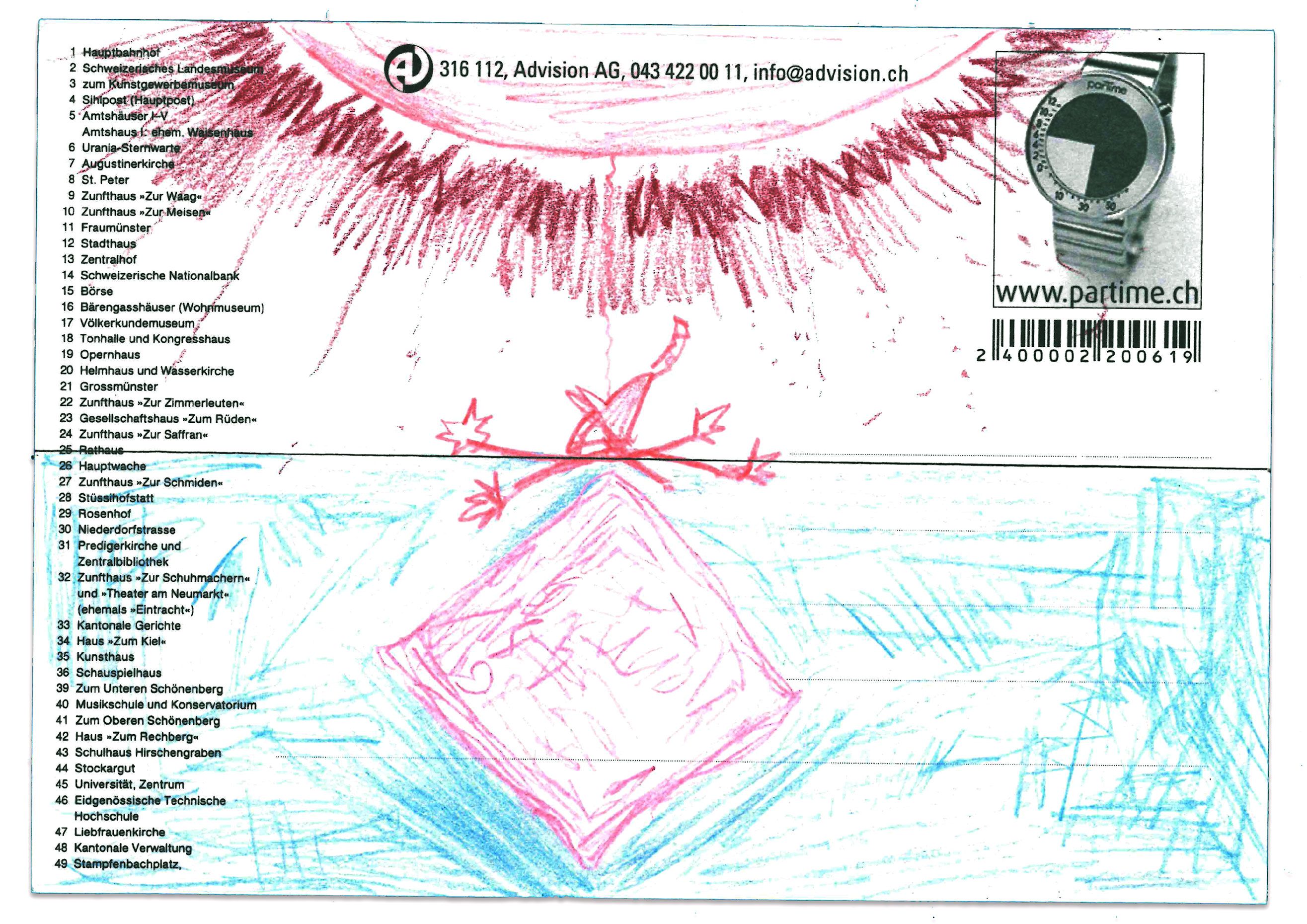
With the water getting warmer and the ceiling becoming thinner, more colors would seep into the cave. Sometimes shards of ice formed skylights, and turquoise beams pierced the darkness. I discovered myself capable of producing energy, too, electrical beams would emanate from my tentacles and ripple through the frozen walls. Hairy beings would surface from the melting depths, providing food for all kinds of flamboyant fish. The cave was lit up with all kinds of beings and all kinds of colours, fish and seahorses would get married and their newborn sirens decorated their parties. There was never-ending dancing to the sound of crackling and dripping, until one day the surface opened up. A beam of warm light pierced through a star-shaped crater connecting the underworld with the breathing sun.

Everything tasted like iron and burnt oil. I floated near the surface, next to a metal colossus that cut through the waves without asking for permission. On the horizon, the darkness was not night but smoke, and in the middle of the water there were ​​foamy scars that come and go. Distant vibrations traveled through the water, not the rhythmic pounding of the earth that I know, irregular songs of engines trying to outrun the wind. We, the drifters, felt the heat radiating from above, a fever that did not belong to the sun. The silver fish used to hide under my belly as if I could protect them from the loudness from above. - Adapted from a fragment shared by Brigitte Hart in the collective archive.

- This narration challenges the binary rigidity of sexual dimorphism. Hippocampus (seahorses) exhibit male pregnancy, destabilizing traditional reproductive roles present in humans. The emergence of "sirens" here suggests a radical fluidity between species and genders, found in Butler, Judith. Gender Trouble: Feminism and the Subversion of Identity. Routledge, 1990.

- In Donna Haraway’s writing, figures are often read through the lens of an anthropology of ritual, where the monstrous marks a liminal phase in rites of passage and moments when social categories loosen or invert.

- Adapted from a fragment shared by Jagna Nawrocka in the collective archive.

- Adapted from a fragment shared by someone unknown in the collective archive. Original: "sea creatures, one of them was inspired by the boat in front of us".

- Jellyfish spread globally via the ballast water of cargo ships, making them a passenger of global capital. These animals do not merely swim but they are transported by the very machinery that travels the oceans, embodying a parasitic resilience to the Anthropocene.

Drawing from 2025 SoC Cohort

Sym 4, 2242

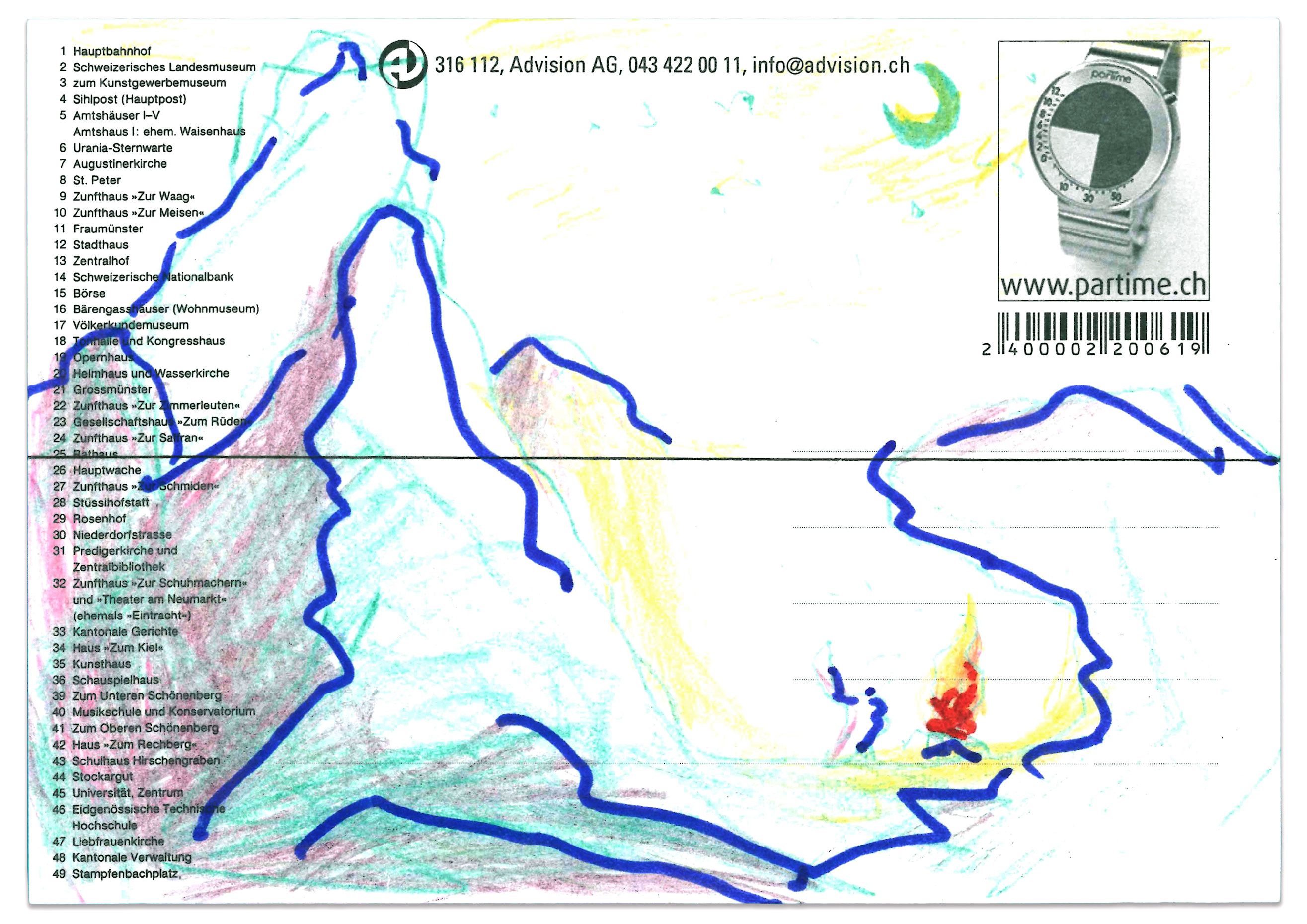
Above us, the silence was blinding, the air so dry it burns. An immense mass of frozen water moved like a slow giant excavating its way into a valley that might become a city. We found ourselves craving something unseen, as the first sprouts of green started to appear around us, together with new smells, calm breeze and a meteor shower. The sirens grew legs and left to roam the land that was hidden under layers of ice. They reached a mountain and lit a fire in a cave, where they danced until the moon was out and the snow came down again but melted in the heat of the flames. They were the first ones to see the orange sunrise.

.

.

- Adapted from a fragment shared by Chantelle Lue in the collective archive.

- The act of lighting a fire does not necessarily have to be the duality of “nature vs. culture” but the emergence of a Vibrant Matter assemblage in the words of Jane Bennett. The fire, the cave, the snow, and the sirens become a spontaneous, self-organizing agencement. The fire is an active element with agency that forces an encounter between the geological (the mountain), the atmospheric (the snow), and the biological (the sirens), thus blurring the line between passive environment and active entity.

- Adapted from a fragment shared by Gabriel Hensche in the collective archive.

Drawing from 2025 SoC Cohort

Sym 3, 2189

Where once the frozen giant lay, there was now the deepest of valleys with the highest of mountains, the sun was hot and I could sense smoke coming from far away, seeping through the water and filling up my belly. The warm pool where I float was constantly stirred by the ripples of boats, swimmers and machinery. The murmuring of hundreds of thousands living at the edge of the water felt stronger than anything else I had experienced in the depths of white where I once drifted, yet I couldn’t separate the individual sounds from each other, they were as big a mass as the moving ice.

The waters were no longer locked in layers, but were released, seeking their own level and forming stable beds and basins where before there had only been frozen potential. The air was wet again, thick with the smell of exposed earth and the fragile green pushing through the mud. The immense frozen mass left behind a cradle, a valley humming ready to welcome every creature

.

.

.

.

- Illustrating Stacy Alaimo’s concept of trans-corporeality: the recognition that the body is not a fortress, but a porous site where the environment, toxicities, and industrial byproducts literally constitute the self. The narrator does not just observe the pollution but becomes part of it, exactly as we do.

- Considering that machinery implies a transition from organic nature to a “social space”, as Henri Lefebvre argues, capitalism survives by actively producing spaces, turning the fluid unmapped water into a grid for transport and/or established leisure.

- "murmuring" as in Jacques Rancière, where it works as the threshold of politics. What could be considered mere noise turns into a relevant sign that requires recognition. It is an expression of disagreement and the sound of the excluded/unrecognized/uncounted.

- The narration plays with the mixing of a multitude of individuals and landscapes. Again considering the terms of Negri, many refuse to be reduced to one.

- Geological formations can be very varied and intriguing. An example is the so-called "giant's kettle”, a glacier pothole made from the strong swirling currents of glacial water. This liquid mass mixed with debris acts as a drill that can carve out deep round shapes. This erosion also affects bigger stones that happened to be inside, making almost perfect spheres inside the kettle.

Drawing from 2025 SoC Cohort

Sym 2, 2094

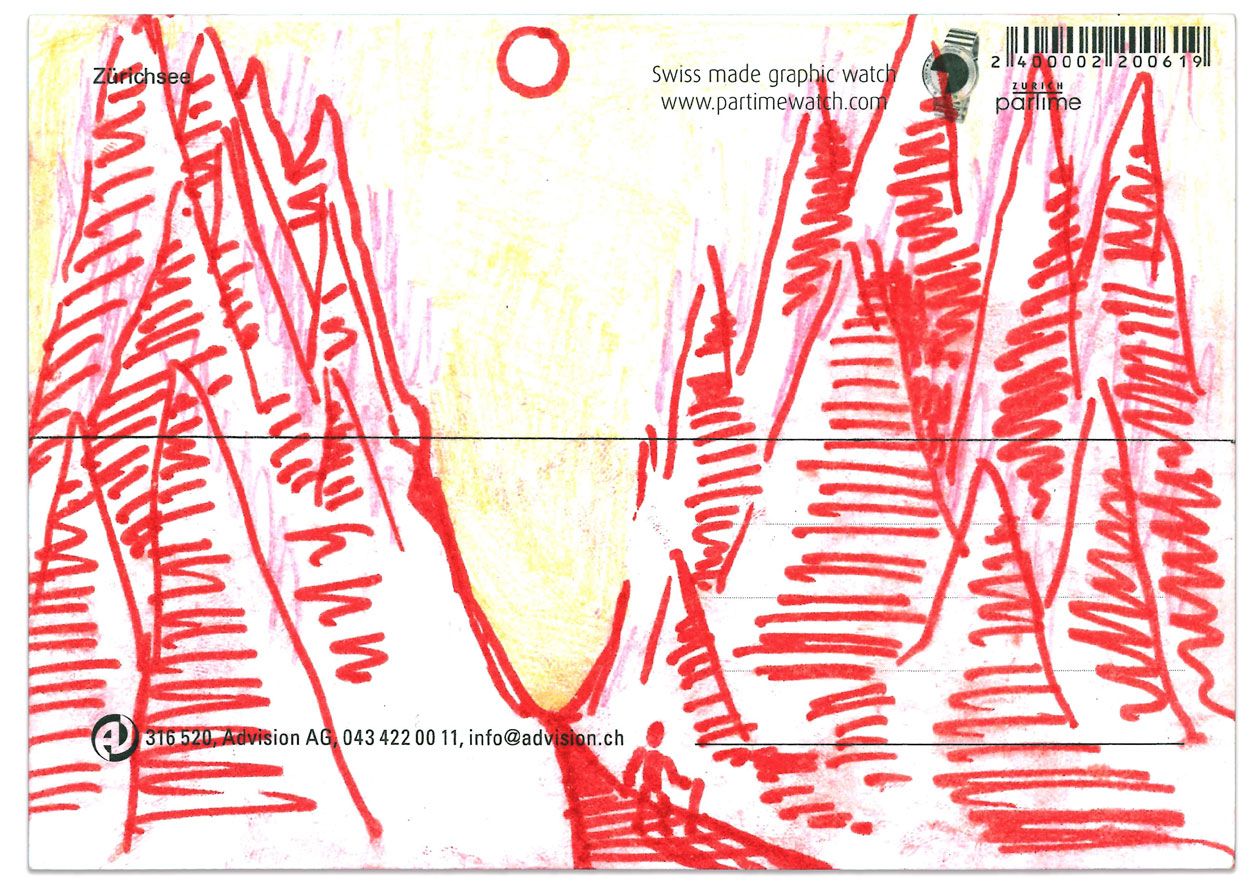
Then the only thing left was a crater of dry soil, red stones and exposed roots that should have never been seen, filled by a murmuring of liquid dripping and ice melting, coming from far away. Its power erased borders that disappeared under turquoise water. Animals and people crossed them like surfing a big cold wave, dispersing all across the drowning land. The glacier had now become the body holding them all afloat. Sometimes I could see two-legged creatures running not because something chased them, but because they had finally understood how fragile the ground beneath them was. They carried a heavy, invisible weight in their chests so they only knew how to look at the retreating ice not with relief, but with a calculation of loss.

It was an era of exhaustion, where the landscape was being skinned alive. I tried teaching them how to hybridize with the corals and the gentleness with which I travel the waters, but their own fear drowned their ears. I noticed the feathered ones above started to change their routes, confused by the winds.

.

.

.

.

.

.

.

.

- Adapted from a fragment shared by someone unknown in the collective archive. Original: "People are running and they are saying that they are going to die."

- Anxiety and speculative pessimism. Timothy Morton argues that Hyperobjects (such as a glacier) are too vast in time and space to be grasped by human senses, leading to anxiety and a useless attempt to manage the unmanageable crisis.

- Defining the violence of the Anthropocene, where human actions act as a geological force driven by fossil capitalism. This exploitation is theorized by Andreas Malm as the "metabolic rift" (the break between social and natural processes) driven by the acceleration of technological production.

- Echoing the ethics of kinship of Donna Haraway's Chthulucene. Gentleness is here presented not as a soft virtue, but as a radical political strategy, a necessity for multispecies flourishing against the current state.

- Regarding Rancière's theory, fear acts as the emotional mechanism that guarantees the maintenance of the Police Order (the established consensus), which dictates that only human industrial action counts as discourse. Sym's voice, advocating for multispecies kinship and an alternative mode of existence, is therefore rendered as mere noise, actively preserving a hierarchy that rejects the fundamental equality of intelligence between human and non-human life, and avoiding the disagreement that could lead to a new form of life.

- The disruption of avian migration patterns serves as a marker of climate change and immediate balance of other species in the ecosystem. This instability is often analyzed in terms of climate precarity and the concept of "slow violence," as explored by Davies and Cloke, where environmental change, though gradual, is lethal and often dispersed across species.

Drawing from 2025 SoC Cohort

Sym 1, 2025

I was born as just myself for the last time, back when they still thought there was no way of surviving. This is when I decided it was time to finally become something else: a plurality that could travel across the unfrozen floods. We will tell the stories contained in the ice, those of tentacular beings, unexpected bonds and wet matter seeping through every crack. 

.

.

.

.

.

- The decision to “become a plurality" is an act of sympoiesis (making-with), rejecting the liberal subject defined by autonomy and individuality as explored by Haraway. This move towards a decentralized, non-hierarchical collective directly challenges the reliance on singular existence.

- Again following Haraway, tentacular thinking is understood not as a brain-bound activity but as an embodied, relational process of reaching and connecting across different species and environments.

- Connections between species as an assemblage, defined by Deleuze and Guattari. Non-hierarchical, spontaneous collectives where heterogeneous elements connect and interact to form new patterns as a direct response to collapse, prioritizing resilience rather than isolation, and asserting a political force outside of hierarchical structures.

Drawing from 2025 SoC Cohort

This narrative is a result of comparing the life cycle of the jellyfish species Turritopsis dohrnii to the structure of uncertain futures. Known as “the immortal jellyfish”, this organism defies the direction of time by reverting to a sexually immature, colonial stage (polyp) when faced with stress or physical damage which, theoretically, renders it biologically immortal. Moreover, in this state it can reproduce by replicating its DNA, becoming hundreds of clones of itself.

We adopted the voice of Sym, a tentacular narrator inspired by an ever present entanglement and life lived along lines, more than can be counted. Sym is short for sympoiesis (Donna Haraway’s term, Greek for "making-with" or "creation together") to contrast with autopoiesis (self-creation), which describes a complex system creating itself in isolation. Sympoiesis asserts that no living being creates itself alone, but always with and in collaboration with other beings and their surroundings (the landscape). This collective lineage, inspired by the The Camille Stories from Donna Haraway, carries the memory of the ice ages, the ancient floods, and the brief civilizations through messy positionalities, as a way of making kin amongst species and environments from different positions and perspectives.

This text also contains text and images from a collective archive*, created during a situated exercise done with the SoC 2025 cohort in Zurich in July of the same year, by the shore of Lake Zurich. This practice was structured as an iterative process where participants would describe a landscape, and would then pass on a variation of the narrative to the next person. Each iteration resulted in a re-description of the same location through geological time, starting in the past and ending in the future, blurring the exact moment of the "present" as this was the landscape itself. This methodology intentionally embraces speculation, recognizing the limitations of purely quantitative data. While having crucial proximity to possible futures thanks to science, the complexity of the systems and the chaotic nature of biological and social responses mean there is always room for the unexpected. By cycling through these narrative shifts, this exercise highlights the radical uncertainty and the necessity of forging connections rather than isolated predictions.

Just as the Turritopsis travels worlds, and acts as a keeper of memories in the flesh of these worlds, we carry this question in our archive: since we know the future cannot be truly 'written,' what can we learn from the ever-changing landscapes? It is important to think what landscapes we use to think of other landscapes. ​​Shaped by trouble, binding in trouble, and exercising trouble, together.

Bibliography

Alaimo, Stacy. Bodily Natures: Science, Environment, and the Material Self. Indiana University Press, 2010.

Bennett, Jane. Vibrant Matter: A Political Ecology of Things. Duke University Press, 2010.

Butler, Judith. Gender Trouble: Feminism and the Subversion of Identity. Routledge, 1990.

Davies, Thom, and Jon Cloke. "Conceptualizing Climate Precarity: Slow Violence and the State of Exception." Theory, Culture & Society 36, no. 2 (2019): 101–123.

Deleuze, Gilles, and Félix Guattari. A Thousand Plateaus: Capitalism and Schizophrenia. Translated by Brian Massumi, University of Minnesota Press, 1987.

Hall, Alaric. “The Etymology and Meanings of Eldritch.” Scottish Language 26 (2007): 16–22.

Haraway, Donna J. Staying with the Trouble: Making Kin in the Chthulucene. Duke University Press, 2016.

Lefebvre, Henri. The Production of Space. Translated by Donald Nicholson-Smith, Blackwell, 1991.

Malm, Andreas. Fossil Capital: The Rise of Steam Power and the Roots of Global Warming. Verso, 2016.

Morton, Timothy. Hyperobjects: Philosophy and Ecology after the End of the World. University of Minnesota Press, 2013.

Negri, Antonio and Hardt Michael, Multitude: War and Democracy in the Age of Empire, The Penguin Press, New York, 2004

Rancière, Jacques. The Distribution of the Sensible: The Politics of Aesthetics. Translated by Gabriel Rockhill, Continuum, 2004

Belén Arellano Cañizares

Art worker, part of AWOL

Giuliana Marmo

Art worker, part of AWOL

Stefan Ralevic

Art worker, part of AWOL

AWOL

Interdisciplinary collective for artistic research on political imaginaries towards climate futures