Zurich
How can I put museums/gallery/exhibition spaces in dialogue with students who seek materials to develop their artistic practice?
How can I make this topic visible to both these target groups so to finally create a direct link between them, a strong cooperation against the climate crisis?
My tentative question has its basis on two main topics that have been floating inside my head for a while now, and that for this application I am finally pushing myself in spitting them out.
Being an art student since a young age, I have been noticing more and more how big is the lack of affordable materials that students have at their disposal in order to experiment and develop their artistic practice. This first problem holds them back from trying new techniques and therefore enrich their knowledge on a certain material or art topic. The second theme of interest of mine has its roots in museums – as well as art galleries and exhibition spaces in general –, and more specifically addresses the waste and its big foot-print that the displaying of art has on our environment. In fact exhibition spaces produce a big amount of waste on a regular basis, starting from the design elements no more in use of the just ended exhibition, old wrapping materials from the archival or the outdated storage furniture. Such materials – whether caused by the lack of space, the moving in a new storage space, or the invention/discovery of a more efficient preserving material – are still in good enough condition for experimental purposes, try-out samples, or even to create mixed media sculptures, paintings, installations by art students that are eager to learn.
Therefore my question is: how can I put in dialogue museums/gallery/exhibition spaces with students who seek materials to develop their artistic practice? How can I make this topic visible to both these target groups so to finally create a direct link between them, a strong cooperation against the climate crisis?
But let me arrive straight to the point. By creating art only with left over materials not only could this topic be brought to the ecologists rounded table, but could also crate an exchange-platform where museums can give away for free or low price their off-cut materials to students, who are going to give them a new artist life.
Objective(s) • Show to my peer students that it is possible to build an art practice based on high quality recycled materials, using my BA final art piece as a starting point; • Bring the academic and institutional discourse on:
- how we think about art conservation and weather our current conservation methods are sustainable (or not);
- the consumer awareness, as art students, on news that we get on instagram, and how ca we react to that.
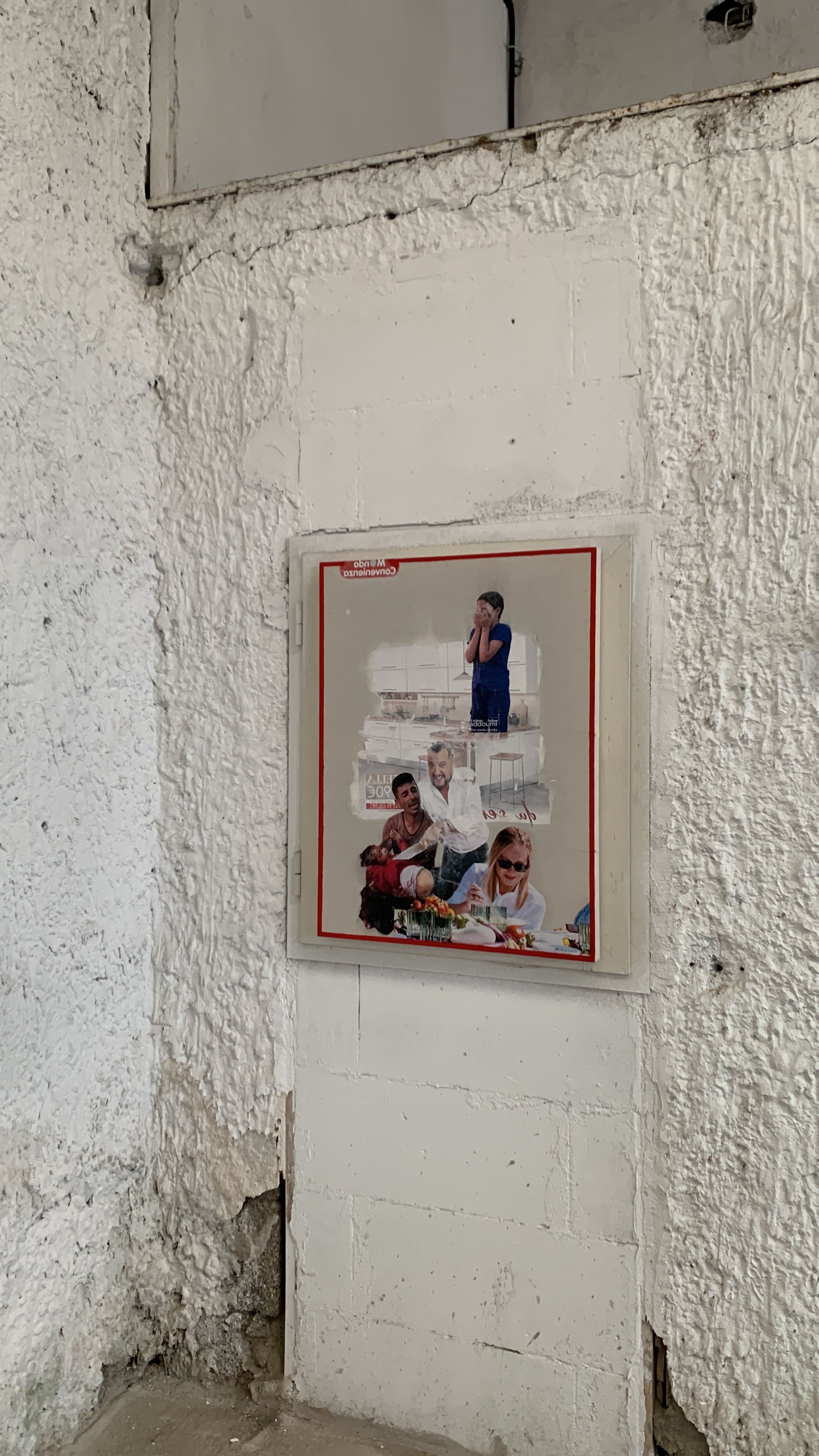
Untitled, 2025 - House & Garden Exhibition in CAPNapoliEst, Napoli, Italy
Method(s) • Since I have been studying in Zurich, a good 95% (in volume) of the materials of my pieces had a previous life; • Communication is the key: I bring up the topic during all the presentations of my pieces; • Caring is sharing: I bring useful material that I get during my internships to ZHdK in the recycling-areas in the building; • Spending time in the exhibition space as much as possible to engage in conversation with the viewers; • Including bibliography, where the references come from in my pieces.
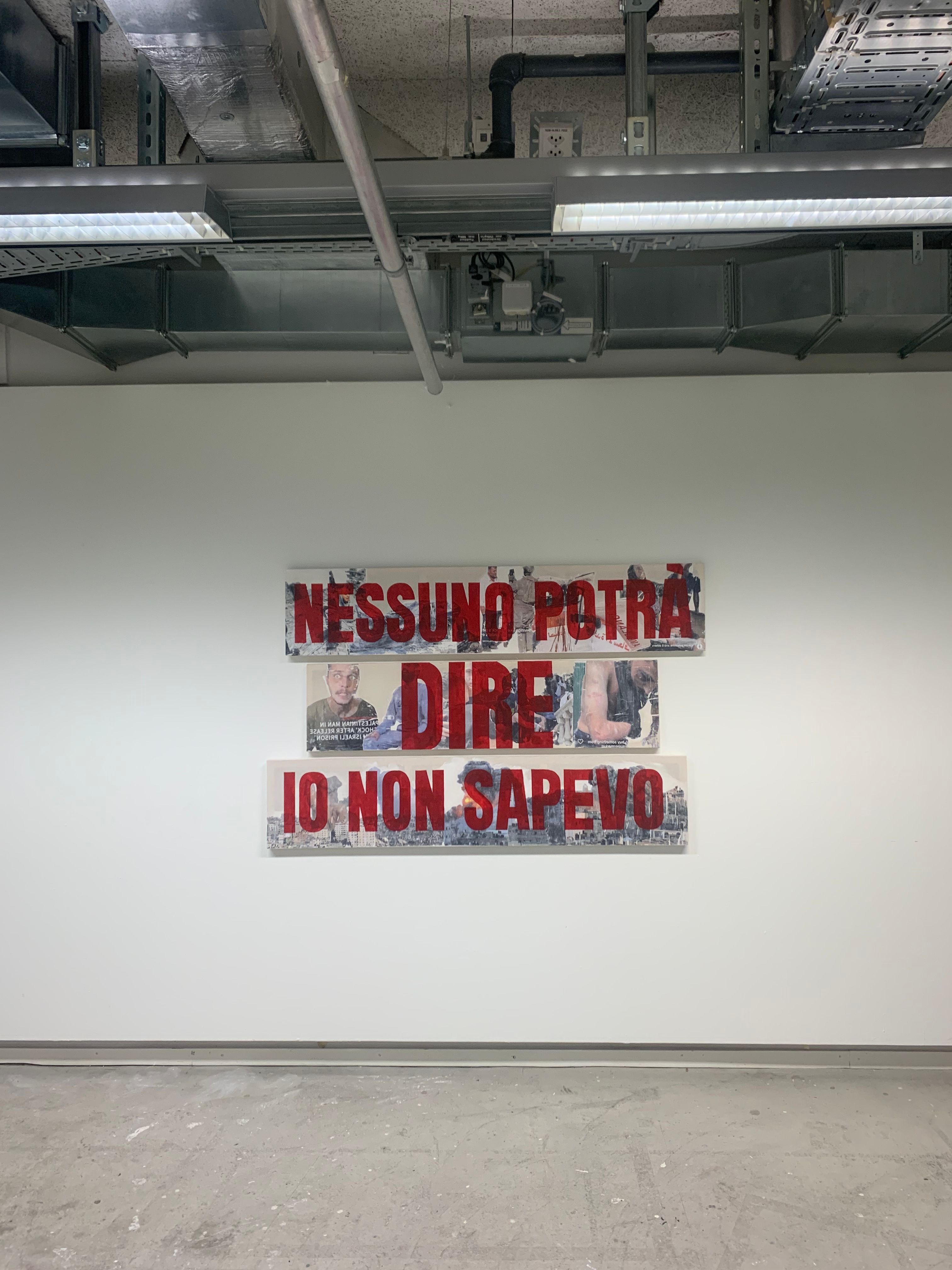
Nessuno potrà dire io non sapevo No one could ever say I didn't know, 2025 - "I Have been Wanting To scream For a while Now" duo exhibition at ZHdK, Zurich, Switzerland
In practice • I will “ask” my research question to the art public during my diploma show through a performative action:
- In which the waste in art production is one of the main focus;
- While bringing the attention to disinformation on ongoing conflicts (f.i. Genocide in Palestine, Israeli-US relations etc...) that Instagram as social media is “offering” us;
- For which I’m now making the installation with which I will interact.
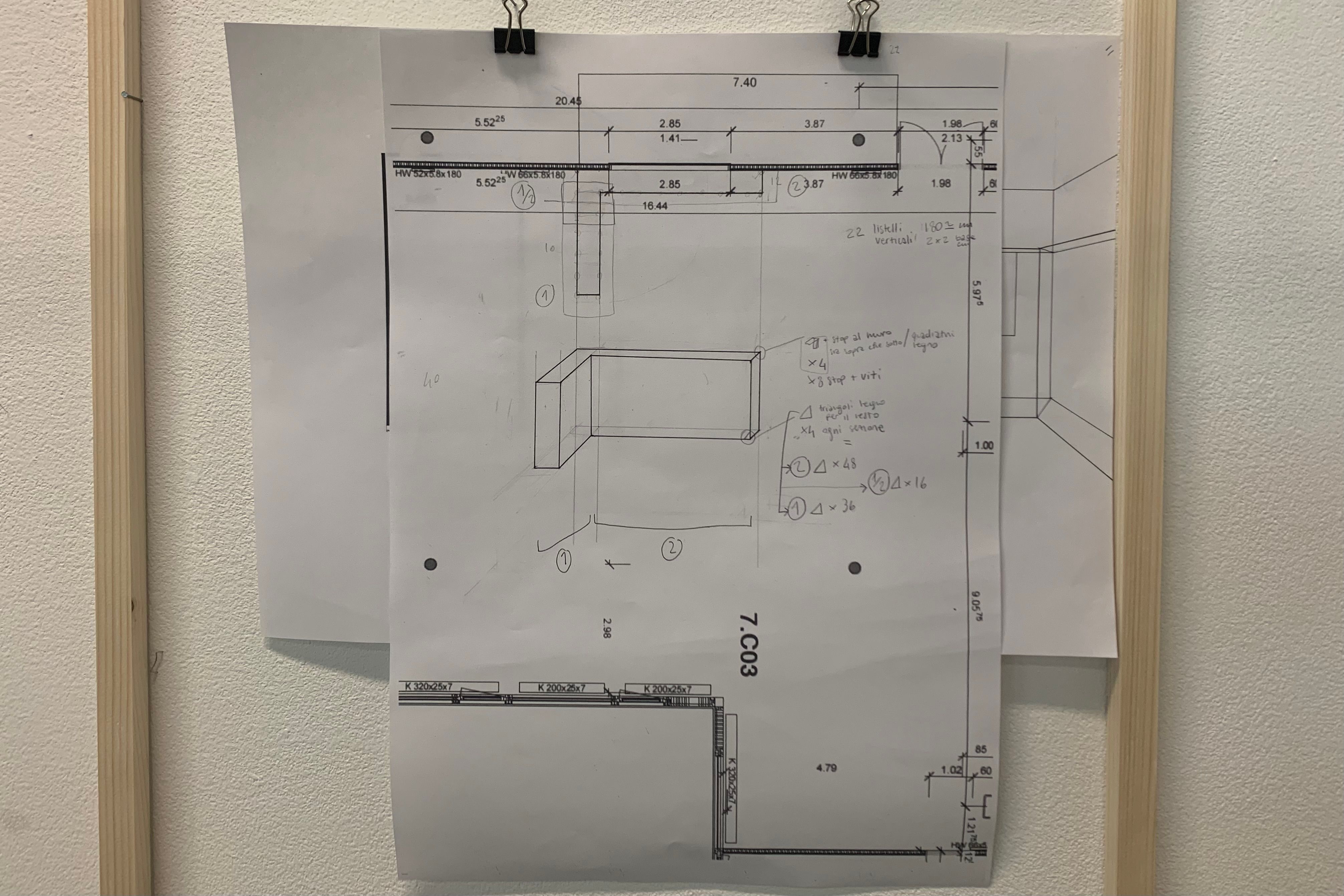
sketch for my diploma project
Further plan(s) • Try to directly connect museums, exhibition spaces, art galleries to art academies and artists studios (through a Ricardo/Marketplace like app) – like ReBiennale in Venice; • Made this the main topic of my practice so to give it more relevance; • Activism as a form of art.
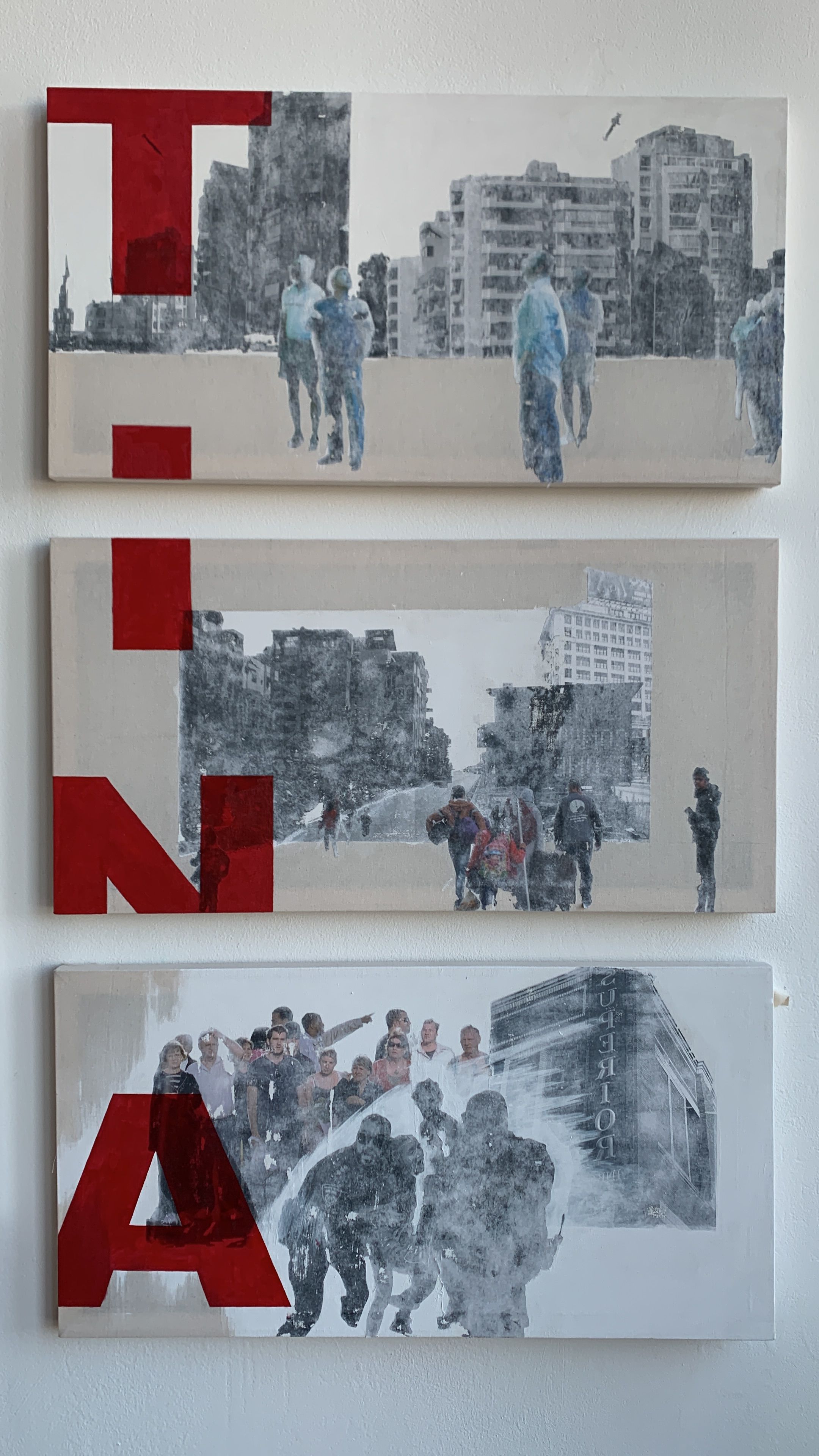
TINA There Is No Alternative, 2024
Anna Campani
Anna is a Fine Arts students at ZHdK, Zurcher Hochschule der Kunst, born in Rome, Italy.
ZHdK – Zürcher Hochschule der Künste
One of the leading art universities in Europe.
Logbook
How do we get informed through social media?
What effect does receiving and looking at decontextualized images have on our understanding of news?
How do digital images shape our idea of reality?
How could we as artists react to the saturation of non-physical images?
How can the physicality of a picture be brought back?
What does art have to do with the documentation of reality?
Could we speak of artistic journalism?
If we consider art as a form of resistance, what practices could be the most effective to make a change?
Can non-violent civil resistance be the core of an art practice?
SoC Gathering, 2026
02.07.2026 — 05.07.2026
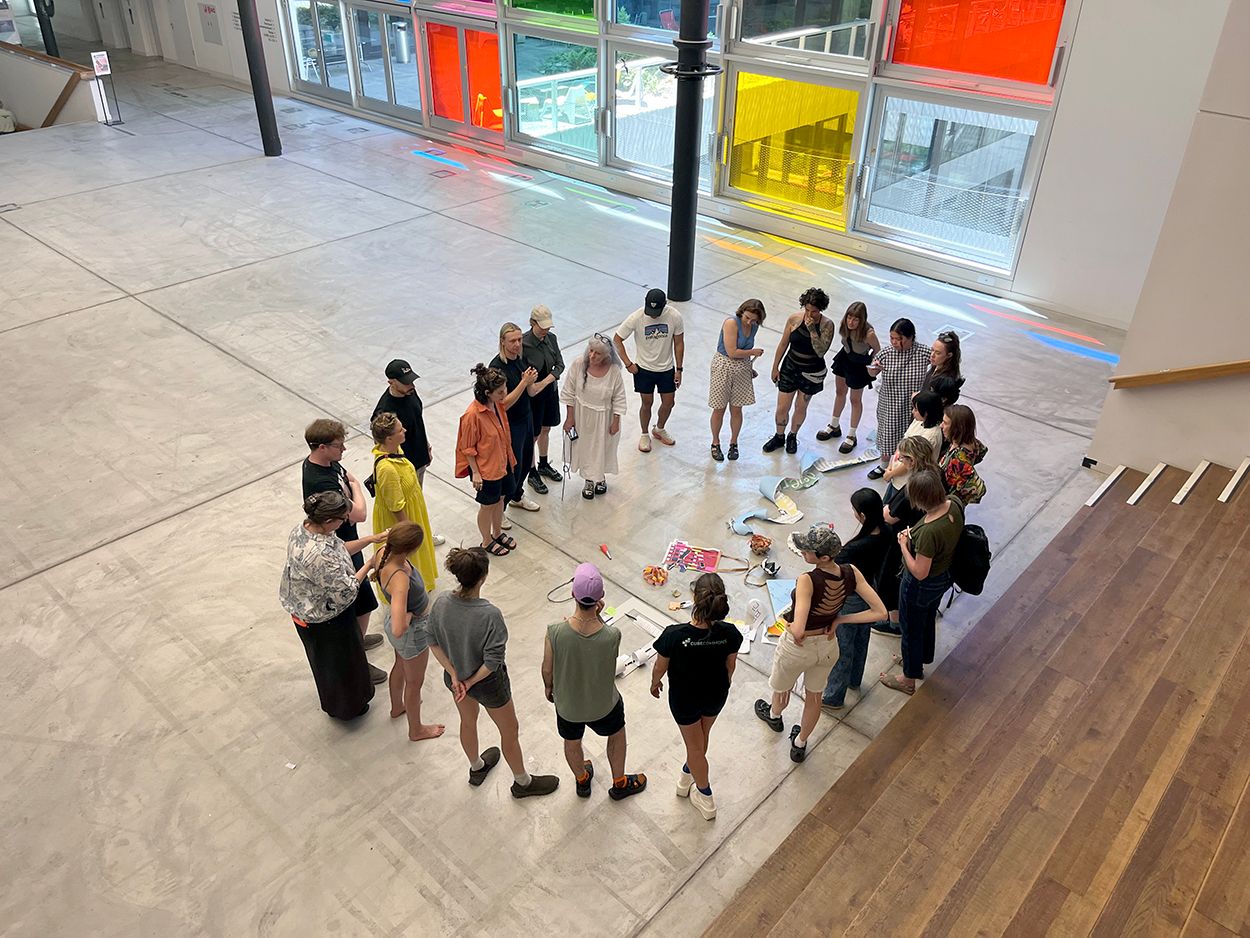
From gatherings in Geneva and Zurich to new collaborations, public programmes, and opportunities to connect — thank you to each and every one of you for continuing to shape School of Commons with your curiosity, generosity, and care. Find out more