How do decentralized governance tools enable novel cultural collaboration and mutual aid?
ÉTÈ Institute (Eternal Terra Ear)
- Transnational
How does Eternal Terra Ears focus on comparative culture promote cross-cultural dialogue and solidarity, especially among marginalized groups?
What's the structure of a Post-Humanitarian system?
ETE Institute (Eternal Terra Ear / 永土耳) is a research-led collective that architecturalizes institutional policy and stratospheric geopolitics into 3D hyperbolic geometry. By decoding the "weaponized computational structures" of international tech-transfers, the institute investigates the interlinkage between nuclear strategic rationality and digital surveillance regimes. Operating on the principle of "Sovereignty by Design," ETE seeks to transform extractive post-humanitarian infrastructures into sovereign compositions where equilibrium—not output product—is the primary measure of systemic health.
ÉTÈ Institute (Eternal Terra Ear):"Post Humanitarian Infrastructure"
The concept of Post-Humanitarian Infrastructure marks a transition from aid as a "gift" to aid as an extractive "protocol," where humanitarianism is increasingly architecturalized through data stacks, biometric verification, and algorithmic mapping. This infrastructure operates as a nuclear-informed density, utilizing a strategic rationality that dissolves the boundary between human and machine decision-making to govern displaced populations. Unlike traditional humanitarianism grounded in physical presence, this post-humanitarian condition is rooted in the extraction of intelligence and energy, treating refugees as displaced infrastructural redundancy within state and techno-capitalist regimes.
Aid-as-Interface
It transforms basic survival tools into points of capture, such as iris scanners and blockchain ledgers, which function as automated command networks mirroring bureaucratic surveillance regimes. These systems create a problem of permanence by establishing a "Sovereign Layer" that exists outside the laws of the host country, governed by international tech-transfers and private contractors who utilize simulation as a middle layer to connect tactics with strategies.
Weaponized zoning
extends this logic by drawing digital enclosures through GPS geofencing and real-time monitoring, dividing territories into "safe" or "quarantined" zones to restrict movement through the use of geometry. This zoning now moves vertically along a stratospheric axis, where high-altitude platforms create "islands of access" and "vertical mediations" that define atmospheres of unbelonging through selective connectivity and data blackouts.
From Survival to Measurable Biometric Protocols
Identity systems function as the most intimate layer of this infrastructure, tying human survival to biometric protocols that turn the individual into a spatial node within a weaponized system. This creates an extractive identity where the state-led algorithm knows the subject better than the subject knows the system, neutralizing digital epistemology to control displaced populations as part of broader security architectures.
The ETE Institute perceives these systems as weaponized computational structures that thrive on the enforced separation of the subject from the governing code. By architecturalizing these relations into hyperbolic geometry, the research aims to reveal that systemic friction is a deliberate feature of extractive governance. Through agentic resistance and sovereignty by design, the goal is to transform weaponized zones into sovereign compositions where the geometry of identity is built on equilibrium rather than technocratic control.
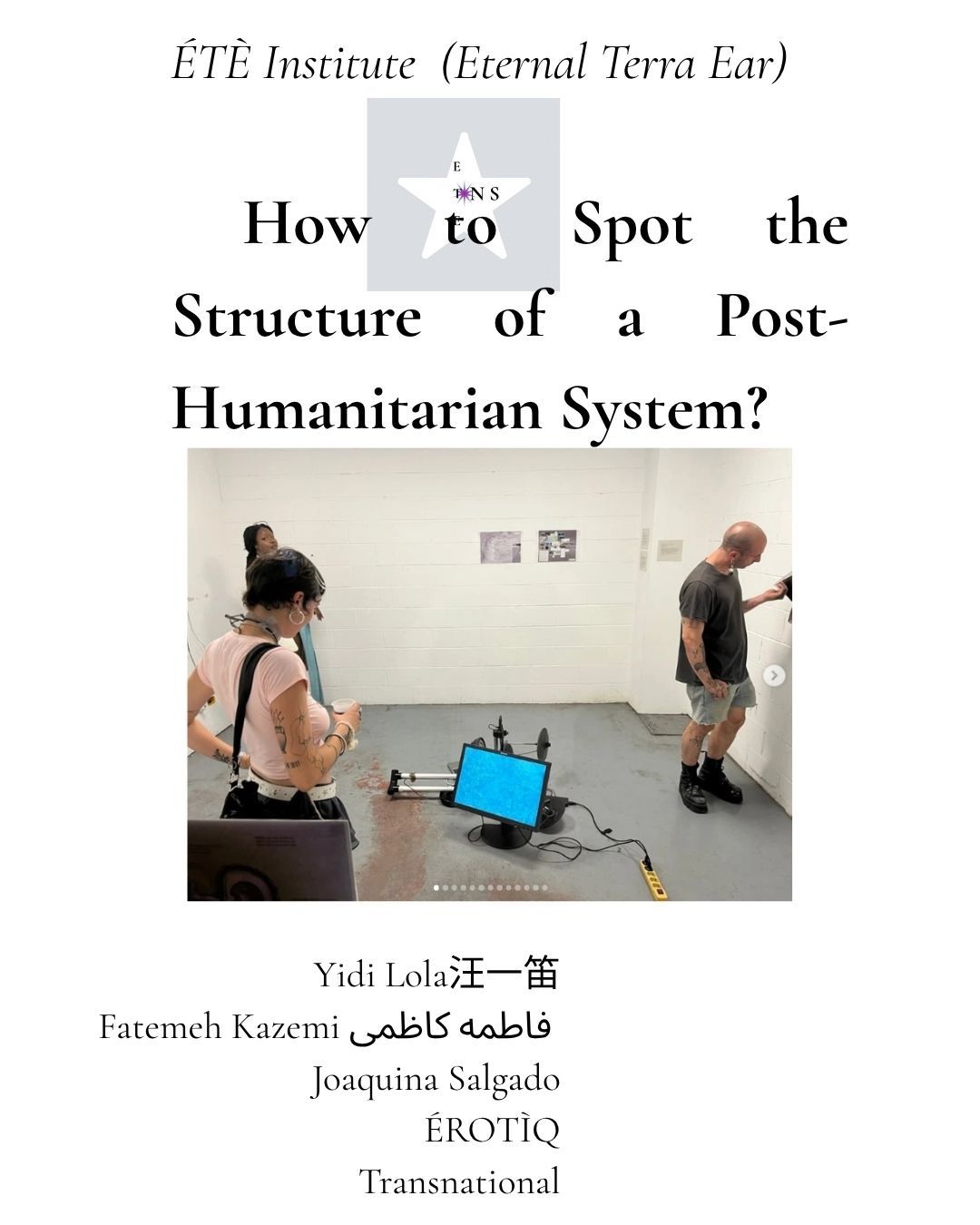
cover
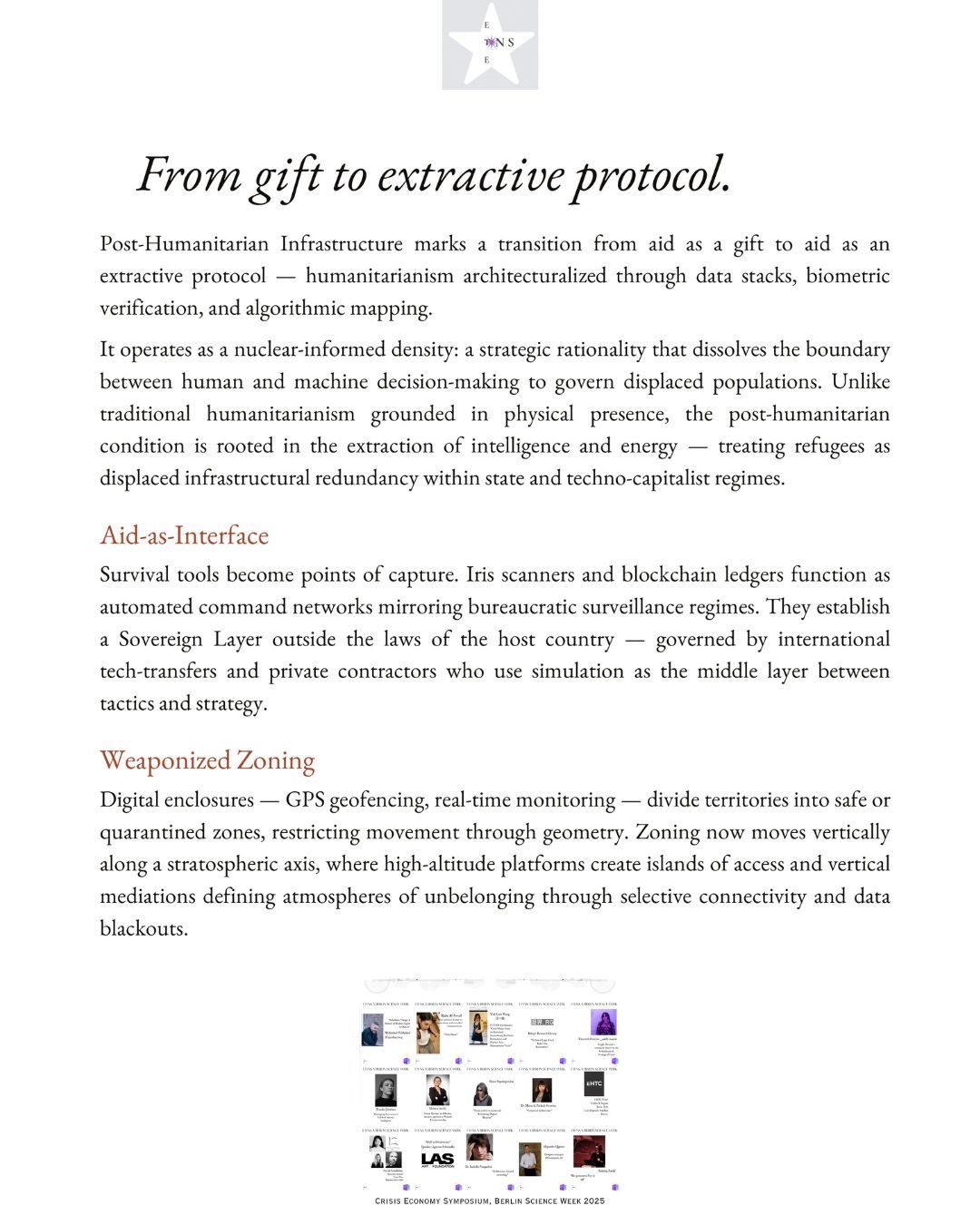
contents
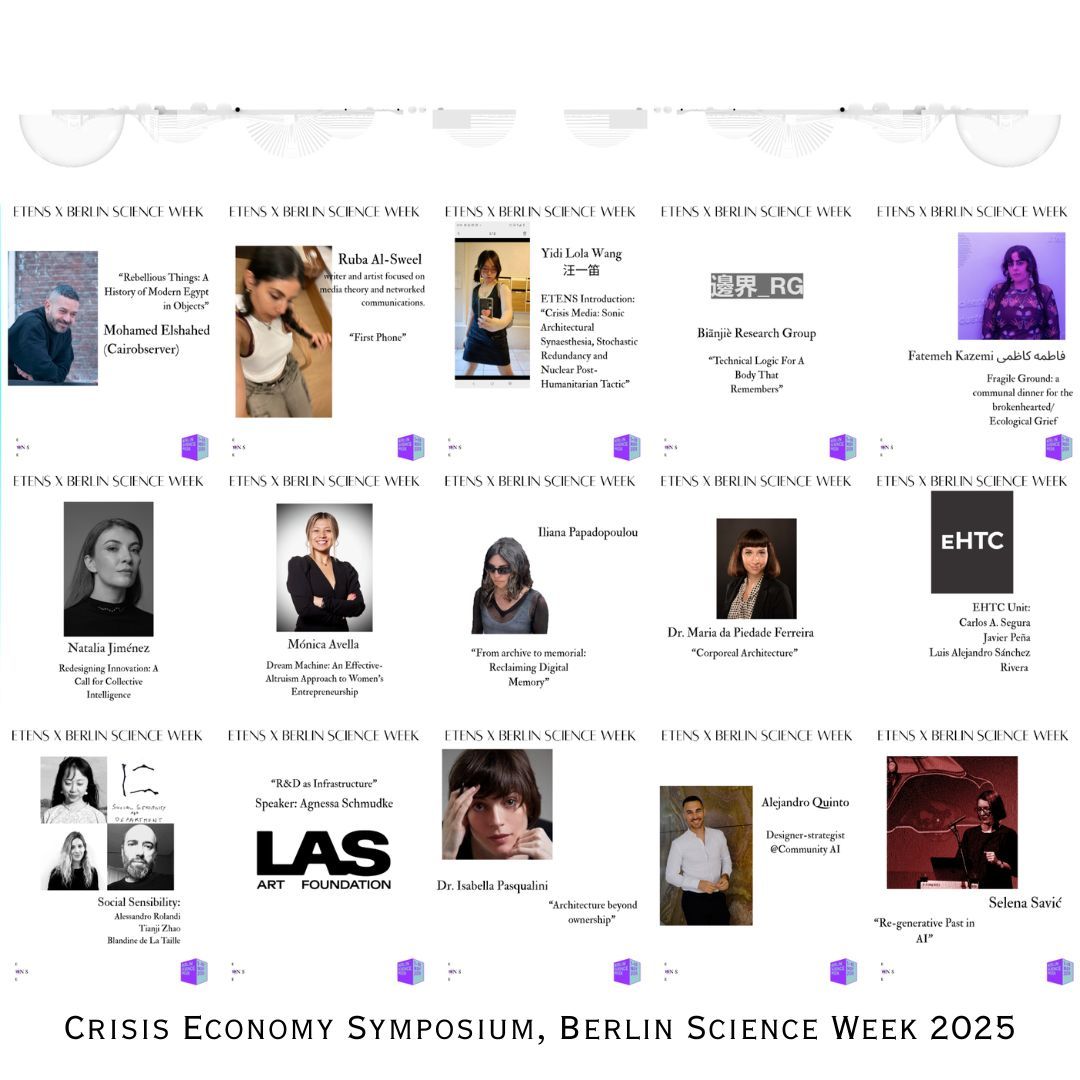
Crisis Economy Symposium: Berlin Science Week 2025
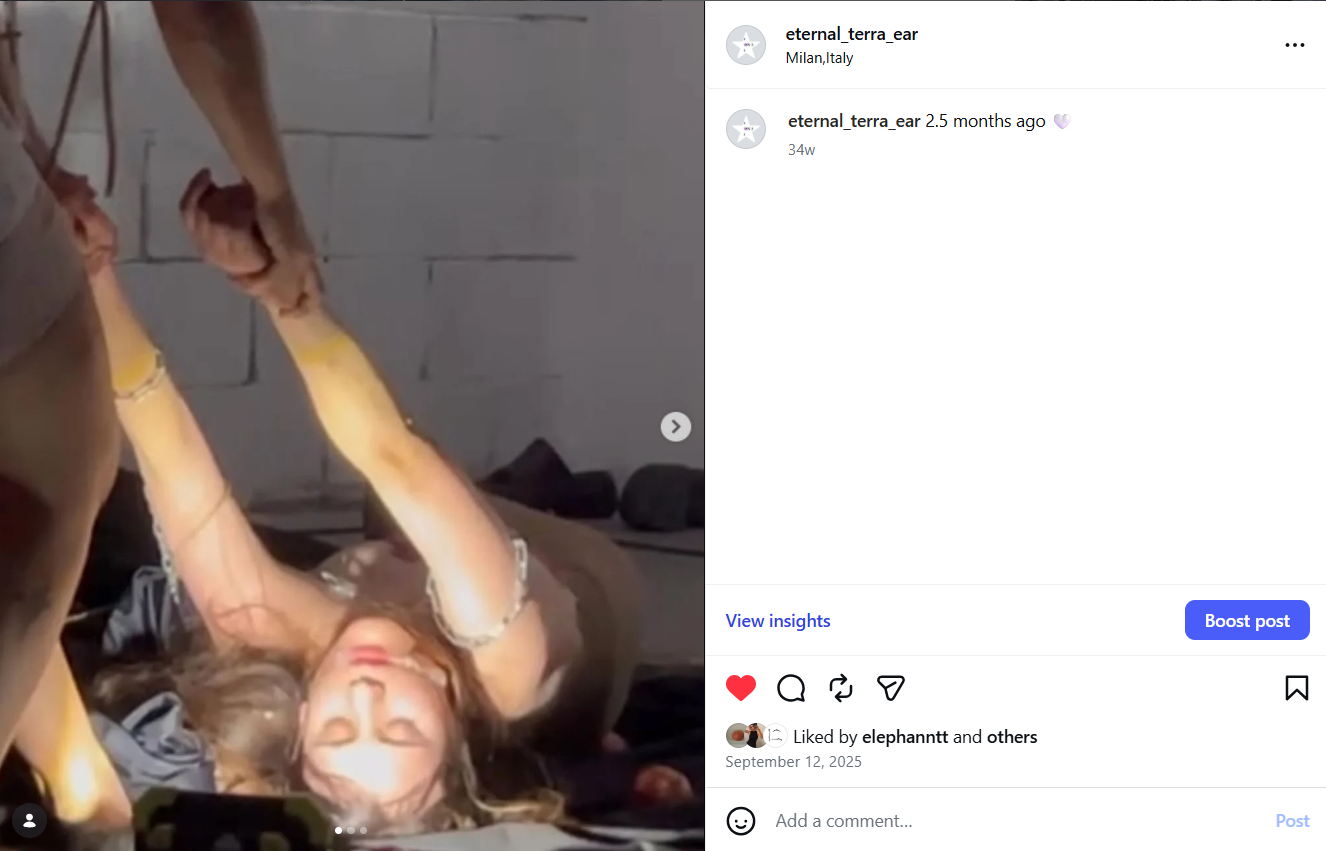
Esoteric performance by @iphone7segrey
Yidi Lola
Yidi is a systems artist and architect work through large scale infrastructure, transnational cryptography, defining the "Critical Sovereign Cooperation".
Fatemeh Kazemi فاطمه کاظمی
Fatemeh (she/they, b. 1992, Tehran)—also known as Afimoh—is an interdisciplinary artist and researcher whose practice spans material fabrication, fiction writing, archiving, filming, curating, organizing, and hosting.
Joaquina Salgado
Joaquina (b. 1995, Argentina) is a new media artist based in Berlin whose work explores the intersections of technology, philosophy, and science. She studied Media Arts at the Universidad Nacional de La Plata (UNLP).
ÉROTÌQ
ÉROTÌQ is a Rome-based audiovisual project that fuses glitchy noise-pop music with symbolic and unsettling imagery.
ÉTÈ Institute (Eternal Terra Ear) Consultant (Internal Advisor):
Mónica Avella International lawyer, policy advisor, and strategist access to justice, women’s empowerment, and humanitarian action across Latin America, Europe, and globally. She holds a MPP from the London School of Economics (LSE), where she founded the Women & Well-Being Forum 2025 with the Colombian Society. Mónica has collaborated with leading international organizations, including UN Women, OHCHR, USAID, Chemonics International, and Sorbonne ONU. Currently, Mónica is developing her involvement with ETENS’ Women’s Entrepreneurship Accelerator.
Komun.aes Security, anti-capitalism & community self-defense project.
SoC Gathering, 2026
02.07.2026 — 05.07.2026
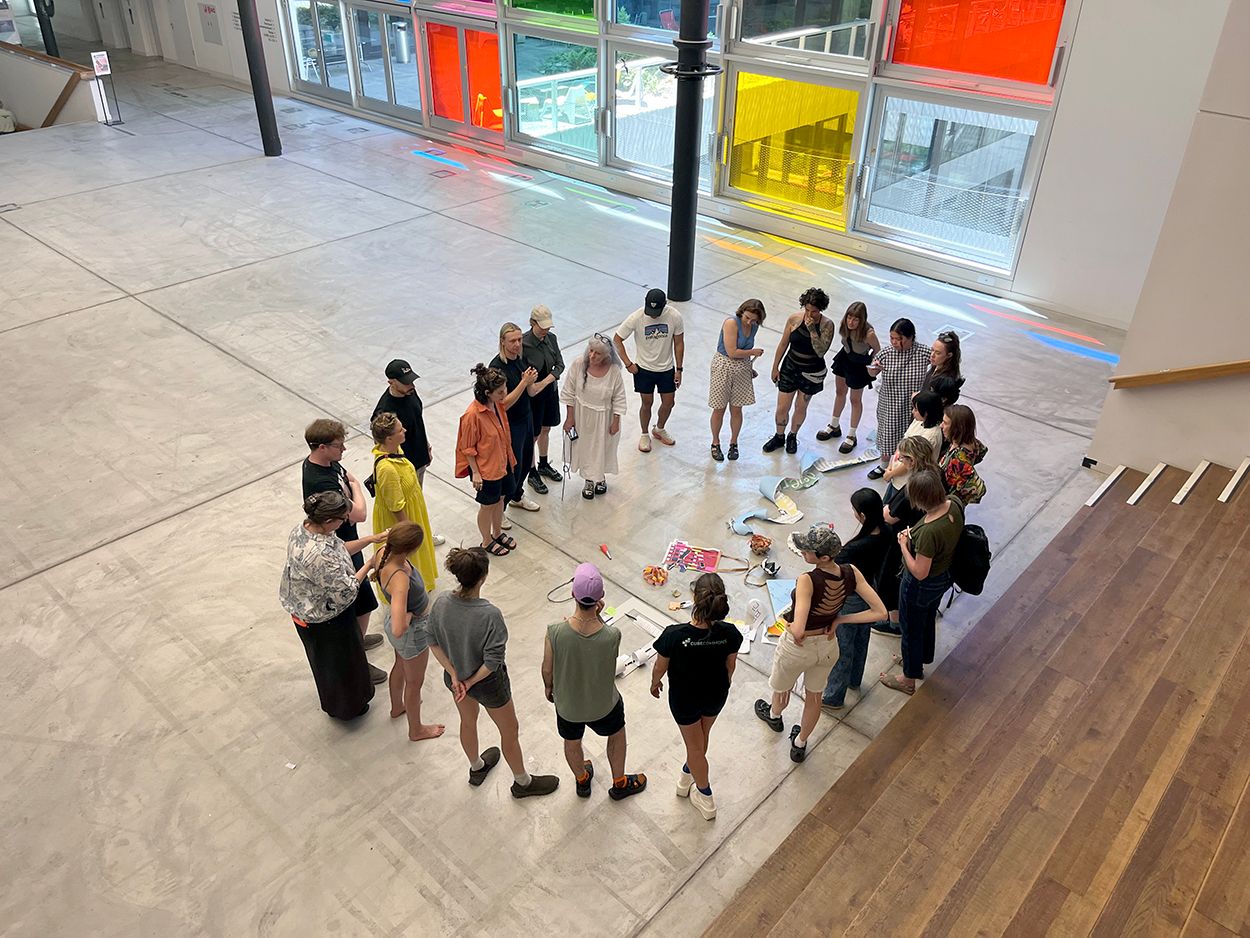
From gatherings in Geneva and Zurich to new collaborations, public programmes, and opportunities to connect — thank you to each and every one of you for continuing to shape School of Commons with your curiosity, generosity, and care. Find out more