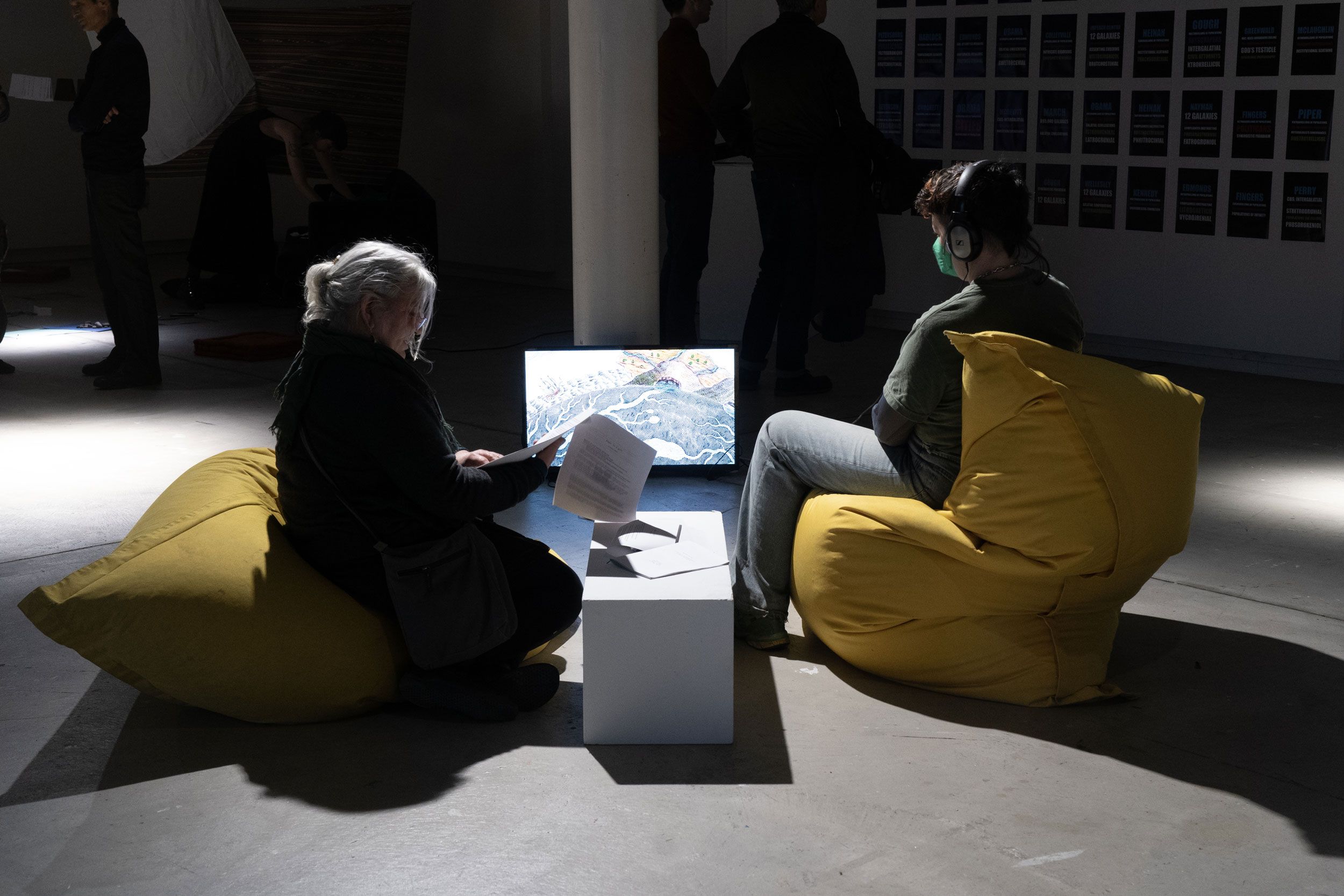
The School of Commons (SoC) Assembly 2025 is a two-day gathering for exchanging and the (alternative) reproduction and circulation of knowledge that seeks to approach, contend, and complicate the question: ‘How to Assemble in our current social, political, economic, ecological times?’
In contrast to traditional symposium structures of knowledge ‘giving’ and ‘receiving’, the SoC Assembly borrows from commons-based models for alternative knowledge production and circulation, to create an exchange-space based upon a reciprocation economy of mutual support and mutual sharing.
For the SoC Assembly, we have invited a series of guest facilitators from across specialisms, experiences, contexts, and disciplines who will each convene a working group, organised around core topics and issues that we believe Assembly participants, and their communities face in their daily work and life. These topics include tools and schools for improper education, “seed-time” as a method for addressing bio cultural urgencies, visual community organising, expanding notions of care through listening and sound, and the mapping of visible and invisible commons.
During the Assembly, facilitators, participants, and current and former SoC cohort participants will be invited into an active exchange of transdisciplinary inquiry, including the sharing of methods and frameworks, establishing of environments for learning, and raising of questions and propositions, unbounded from discipline or taxonomy.
The SoC Assembly encourages explorations into alternative ways and workings to produce, distribute, and make public alternative forms of knowledge and to create new forms and scopes of ‘assembling’ in the broadest sense. In doing so, bridging theory with practice, thinking with doing, and providing new frameworks for organising, practicing, and researching as methods for transferring these approaches into differing environments, scales, and contexts.
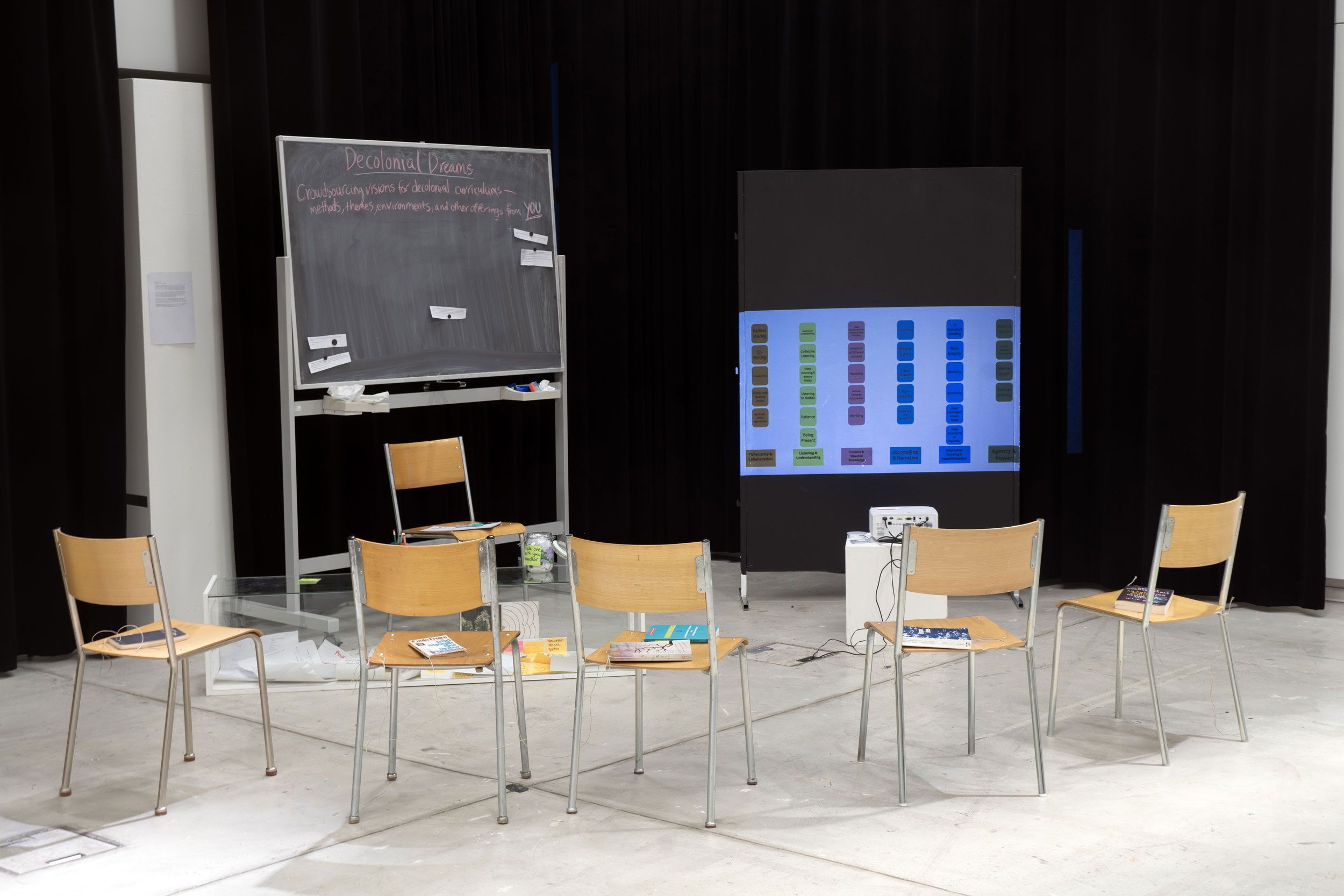
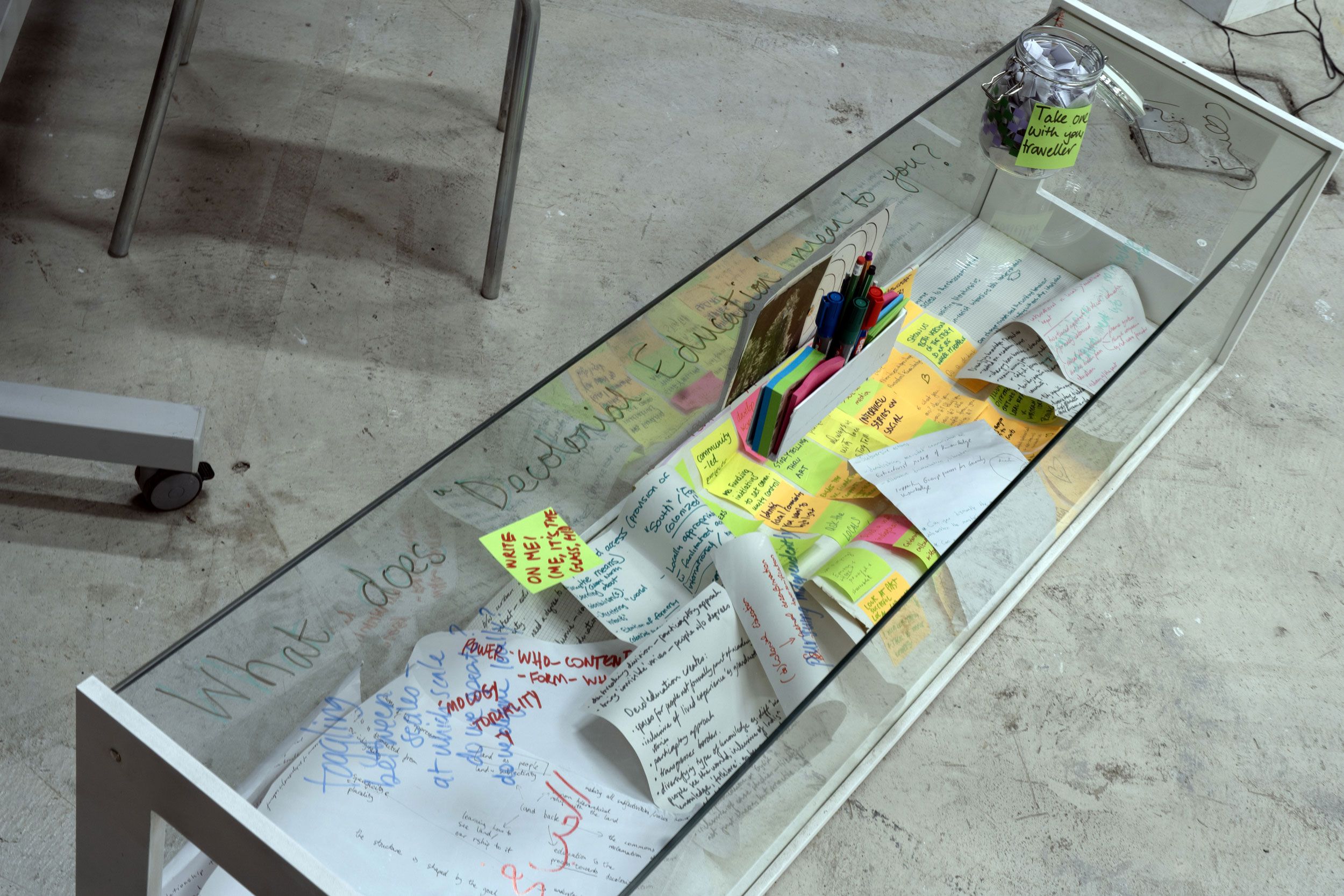
Over the two-days, the SoC Assembly will be organised into a Morning Programme* dedicated to Working Groups for learning and exchanging, convened by guest facilitators, and an Afternoon Programme* of exhibitions, lectures, and workshops, organised by the SoC Cohort 2024. The event will culminate in an Assembly Podium that brings the guest facilitators, SoC participants, and audience together to reflect upon and gather the means, modes, and forms of and for expanded assembling that have emerged over the weekend.
Working Groups 1 - School of Improper Education Hybridly facilitated by Fiky Daulay & Nuraini Juliastuti, KUNCI Study Forum* (Yogyakarta, Indonesia) *joining digitally* The workshop aims to utilise the existence of the temporary group formed through the School of Commons as a medium to problematize the meaning of works, resting, common pot and solidarity. As prompts, we want to use these following keywords: language/translation, updating individual projects, archiving and networking, trans-solidarity redistribution, sustaining networks, economy of attention, distraction, scrolling, deep observing, categorizing information/knowledge, visibility, understanding of archives. What kinds of newly imagined networks emerged from disparate and undefined geographical locations? If we were to define it, what formless formation would it be? How could the network foster care, online and onsite?
2 - “Seed-time”: How to metabolize our biocultural urgencies of today? Facilitated by Zoë Heyn-Jones and Ana Rivera, Materia Abierta (Mexico City, Mexico) In this Assembly Working Group, members of Materia Abierta will share their experience developing spaces for learning and thinking together as an opportunity for political organizing. The project aims to recalibrate their learning practices through their recent efforts of developing a small community garden in their studio patio that has softened their pedagogies around the indecipherable temporalities of the garden and its material needs — something they have been loosely approaching as "seed-time". This Assembly Working Group will engage in a rehearsal to metabolize a will to gather around the biocultural urgencies of today. We will exchange seeds, we will sow alliances.
Together we will consider the temporal wavelengths of a garden. The act of planting a seed is brief but the time spent before harvesting has longer temporalities and different needs (nurturing, watering, composting, for example). The group will reflect on the ways seeds travel and the technologies they have developed to sustain time. We will embark on exercises of temporal and spatial inflection on the ways we assemble as being (de)organized in service of caring for other expressions of life.
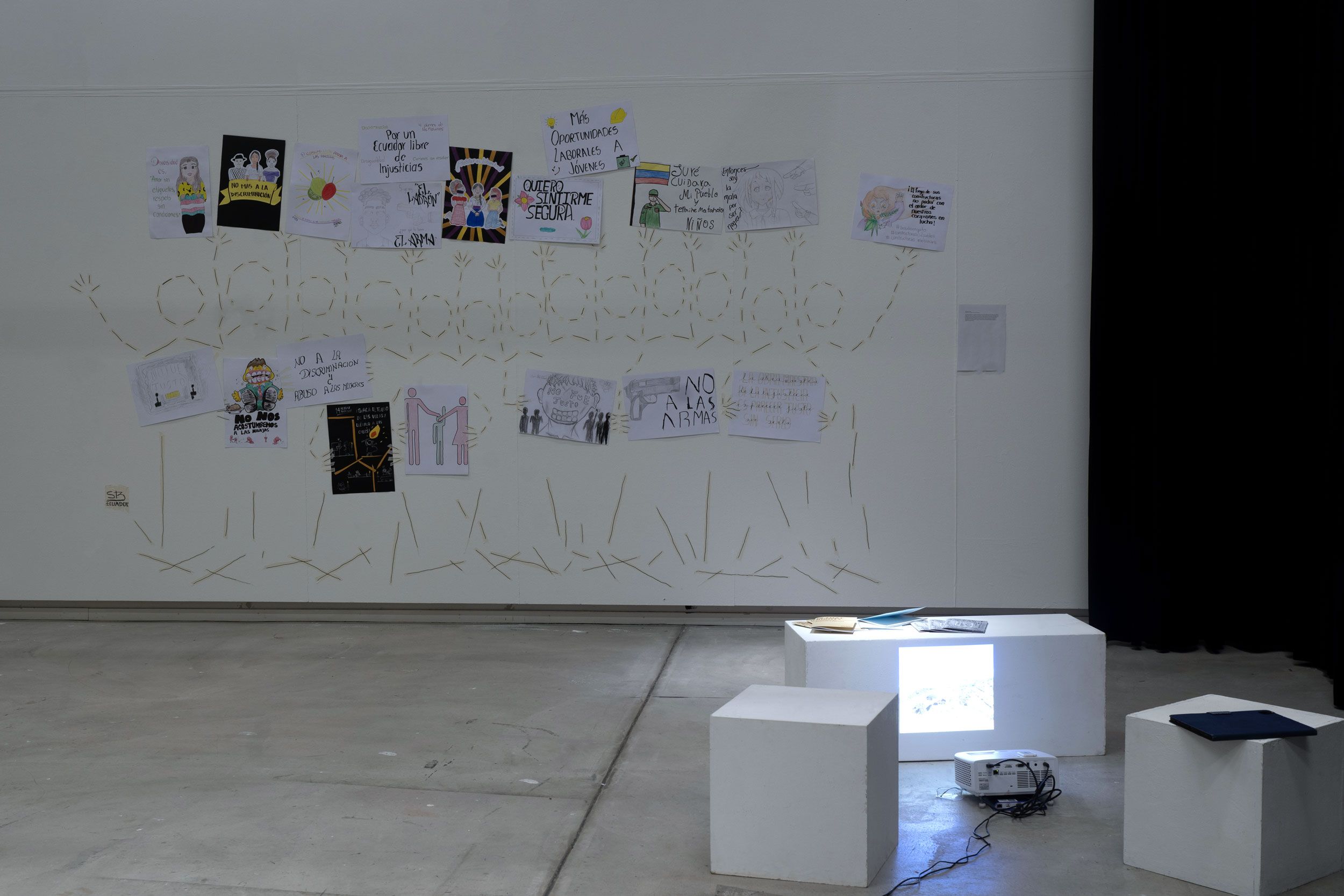
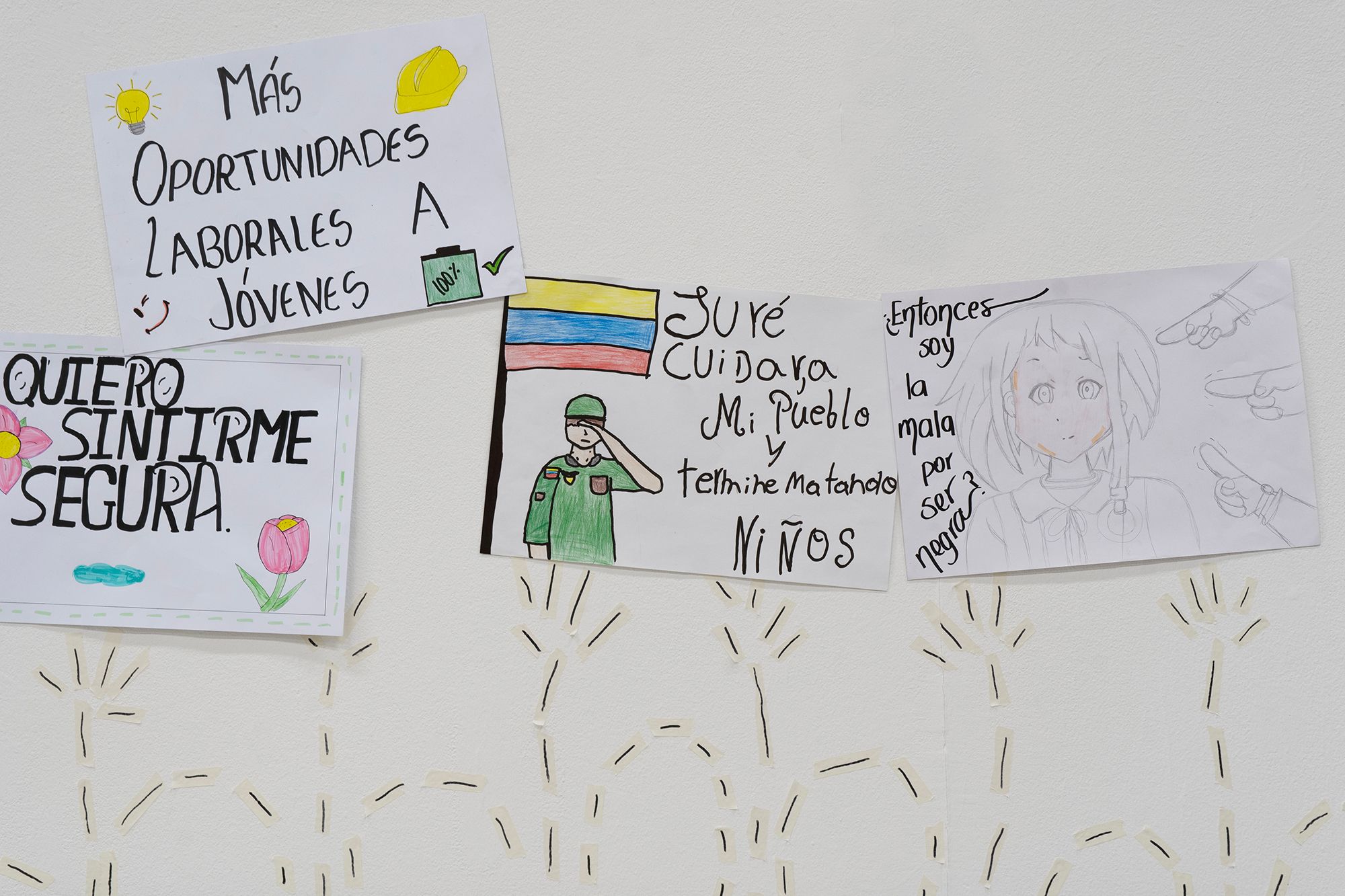
3 – How can community organisers use drawing? Facilitated by Rosalie Schweiker, Migrants in Culture (London, UK) In this Assembly Working Group Migrants in Culture will share practical skills on using drawing and design for community organising, especially for people who are working towards border abolition and migrant/racial justice. We will share easy ways to use drawing in your meetings, protest, and organising work. You don't have to have any skills or experience in drawing, it's not about good or bad, it's about practice. This Assembly Working Group will be especially interesting for designers and artists who want to use their skills within social movements. It will also try to uplift and support community (and other political) organisers who want to integrate art & imagination-based work into their work.
This Assembly Working Group can be facilitated in English and/or German upon request.
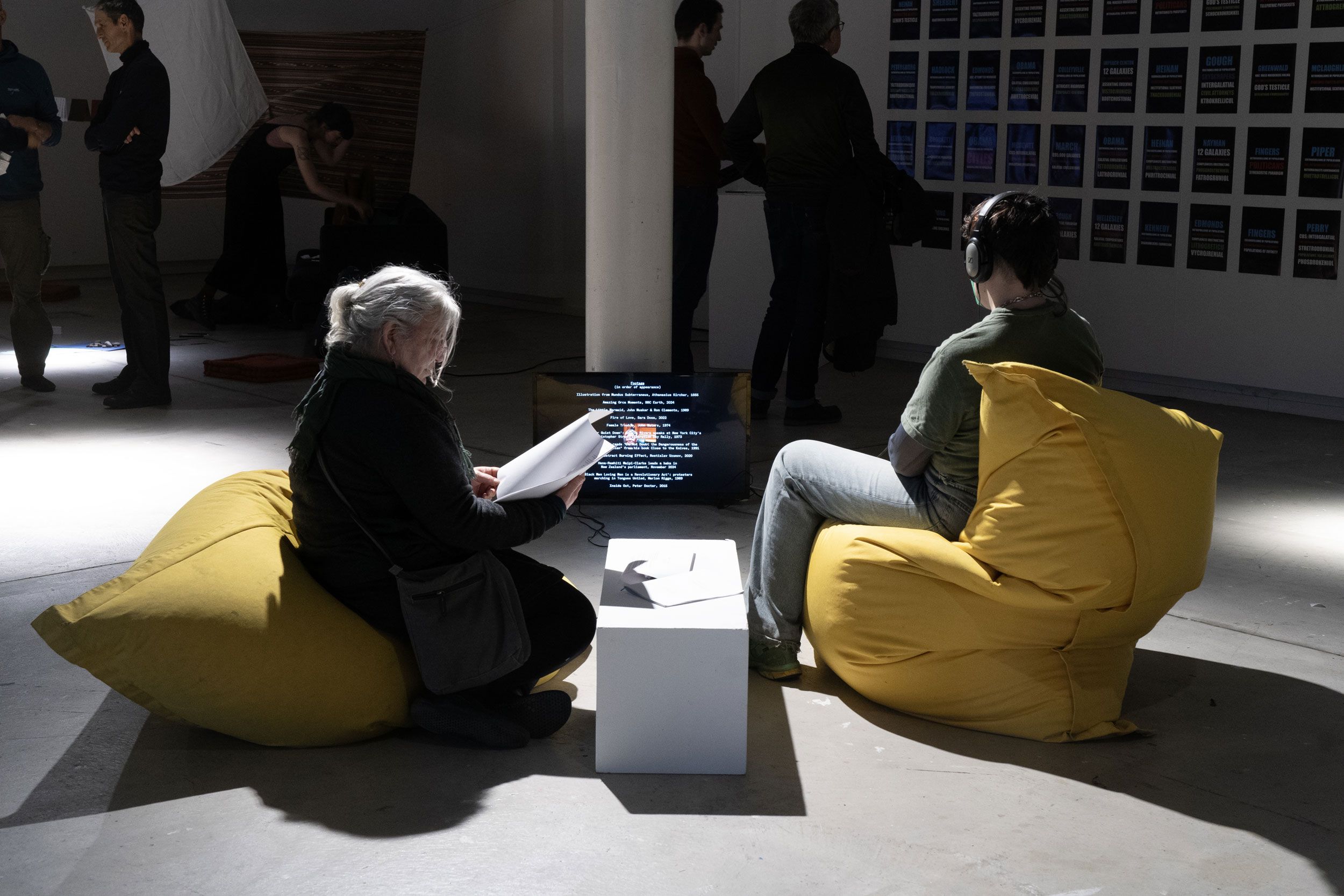
4 – “Phonocene”: how can a new era of expansive care be listened to and assembled through sound? Facilitated by Yuri Tuma, Institute for Postnatural Studies (Madrid, Spain) Earth's symphony extends far beyond the ozone layer, weaving its way into the very fabric of life and the cosmos. From the tiniest microorganisms to the vast expanse of matter, we are constantly transformed, both mentally and physically, by the sonic and cultural vibrations of our urban and natural environments. Yet, these intricate entanglements often go unnoticed by a culture fixated on the visual, failing to recognize listening as a powerful tool for self and collective care. By Giving attention to the sounds around us, we can unlock exciting possibilities for forging new systems of kinship and interconnectedness.
This Assembly Working Group considers, what happens when we try to understand the planetary siblinghood between all sentience through the way we listen and communicate to the diversity of what is the “other”? By delving into the exploration of multiple fields of research like sonic technology, listening methodologies, queer theory, colonialism, field recording, and interspecies communication we will collectively shift our perspective towards the Phonocene, a vision of the future that proposes sound and active listening in the center of an era, a new era of expansive care, that resists capitalism’s hunger for growth, a slower era that promotes radical ecological change.
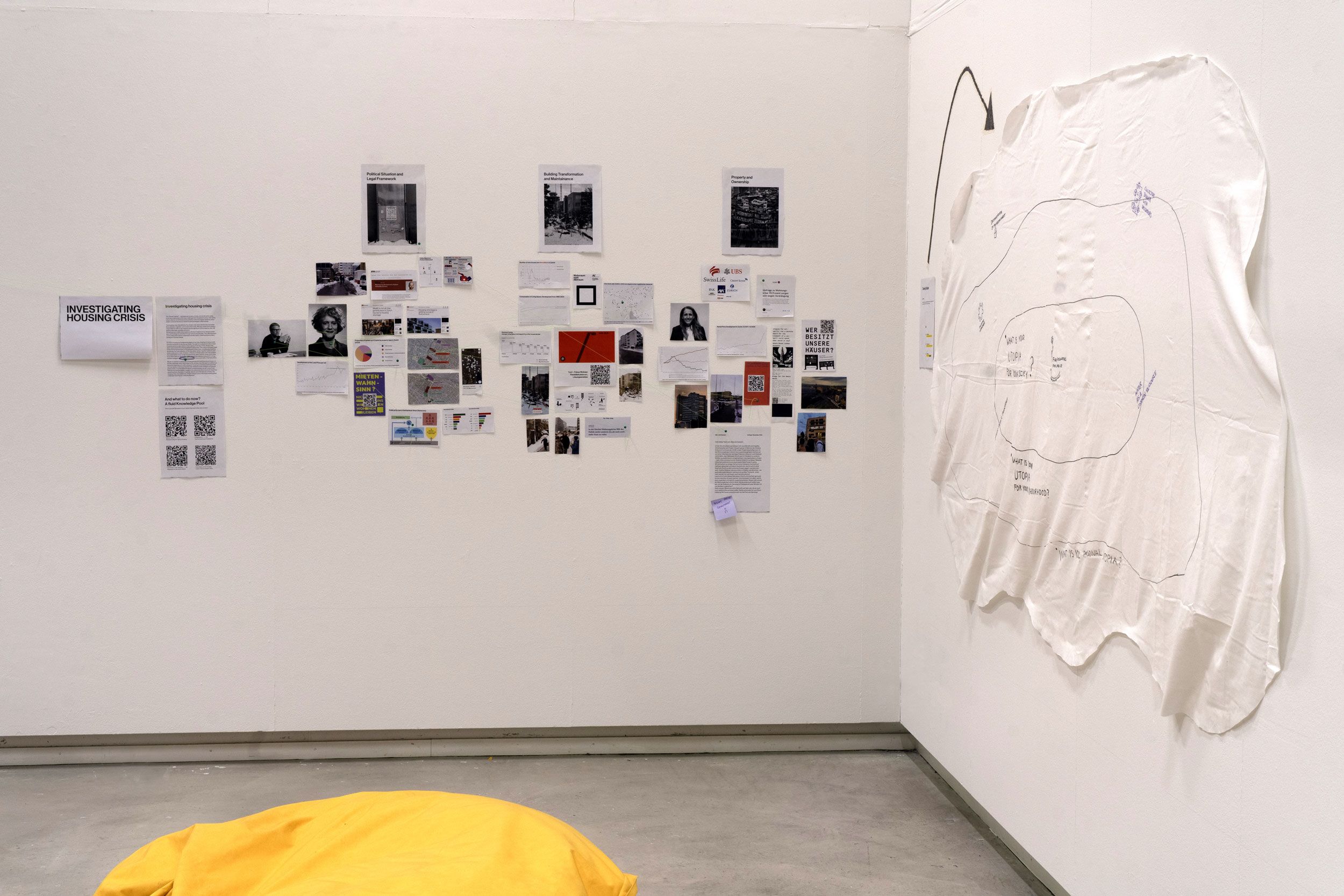
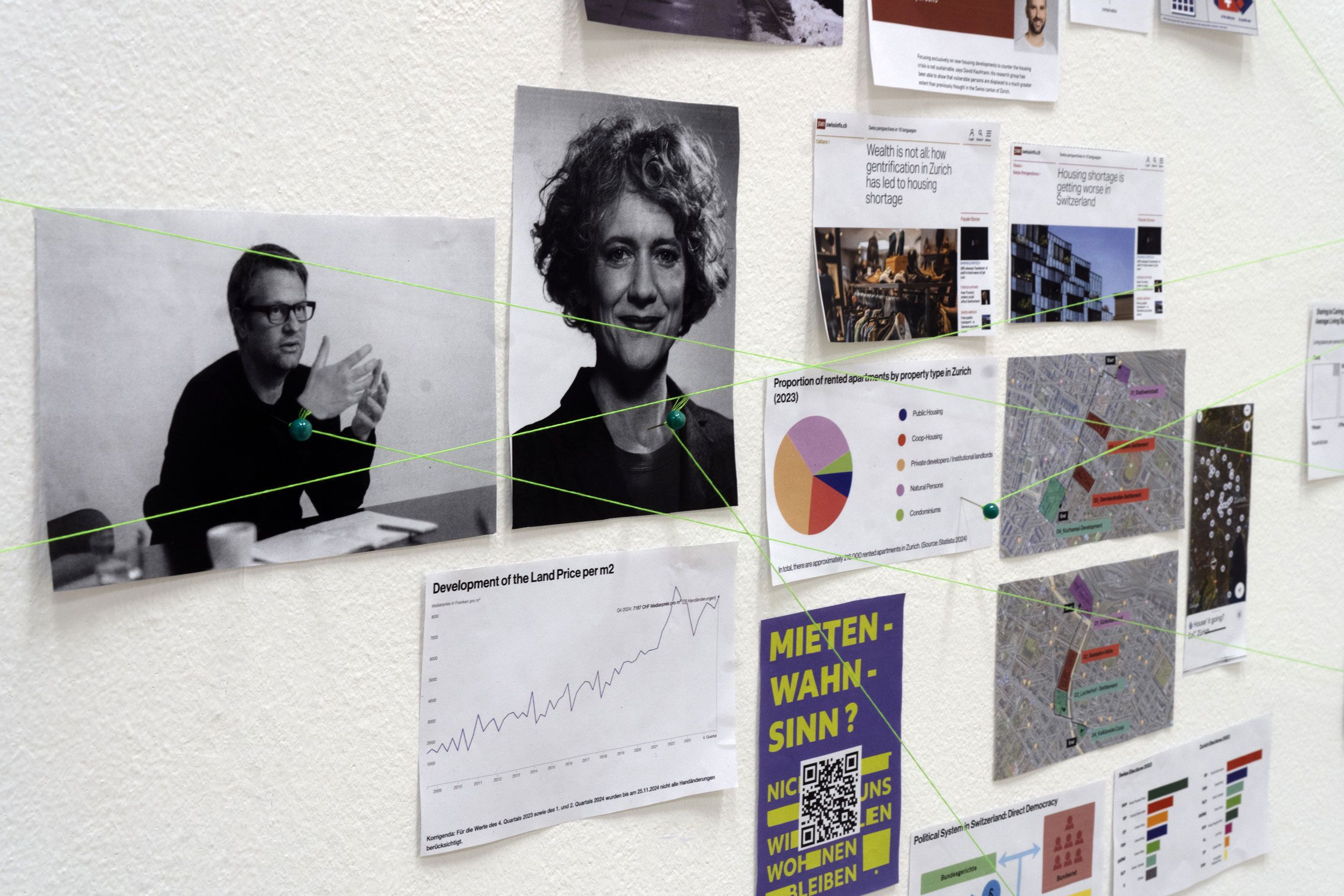
5 – Mapping the Commons and How They Are Sustained Facilitated by Sepp Eckenhaussen, Caradt Research Group of the St. Joost Academy/ Institute of Network Cultures (Amsterdam, NL) In this Assembly Working Group, participants will create a space of study and learning around the relationships between art and political economy. This is facilitated through a series of collective exercises which (counter)map the alternative economies and activist practices surrounding the making of commons and collectivity, as well as the material and immaterial realities which directly inform them.
In this workshop, Sepp Eckenhaussen will facilitate a process of the collective (counter)mapping of projects and initiatives of the participants, looking at the economies, infrastructures, and organisational models—both visible and invisible, formal and informal—surrounding these projects, as possible routes towards the commoning of resources and imaginations.
***************************************************************************************